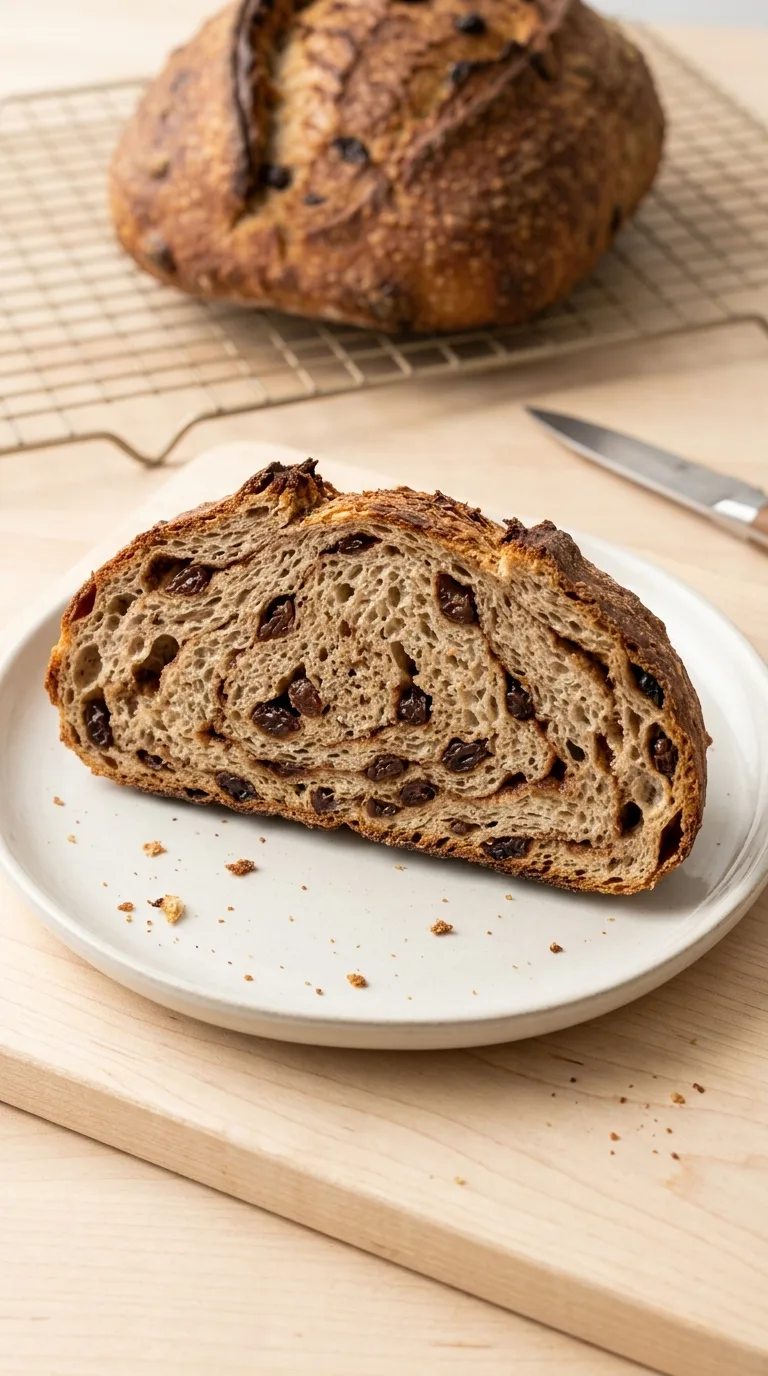
No Knead Cinnamon Raisin Bread is a rustic yeast loaf with a crisp, deeply golden crust, soft interior, warm cinnamon flavor, and sweet raisins throughout. The dough is intentionally wet and sticky, allowing time rather than kneading to develop its structure and create an airy, pleasantly chewy crumb.
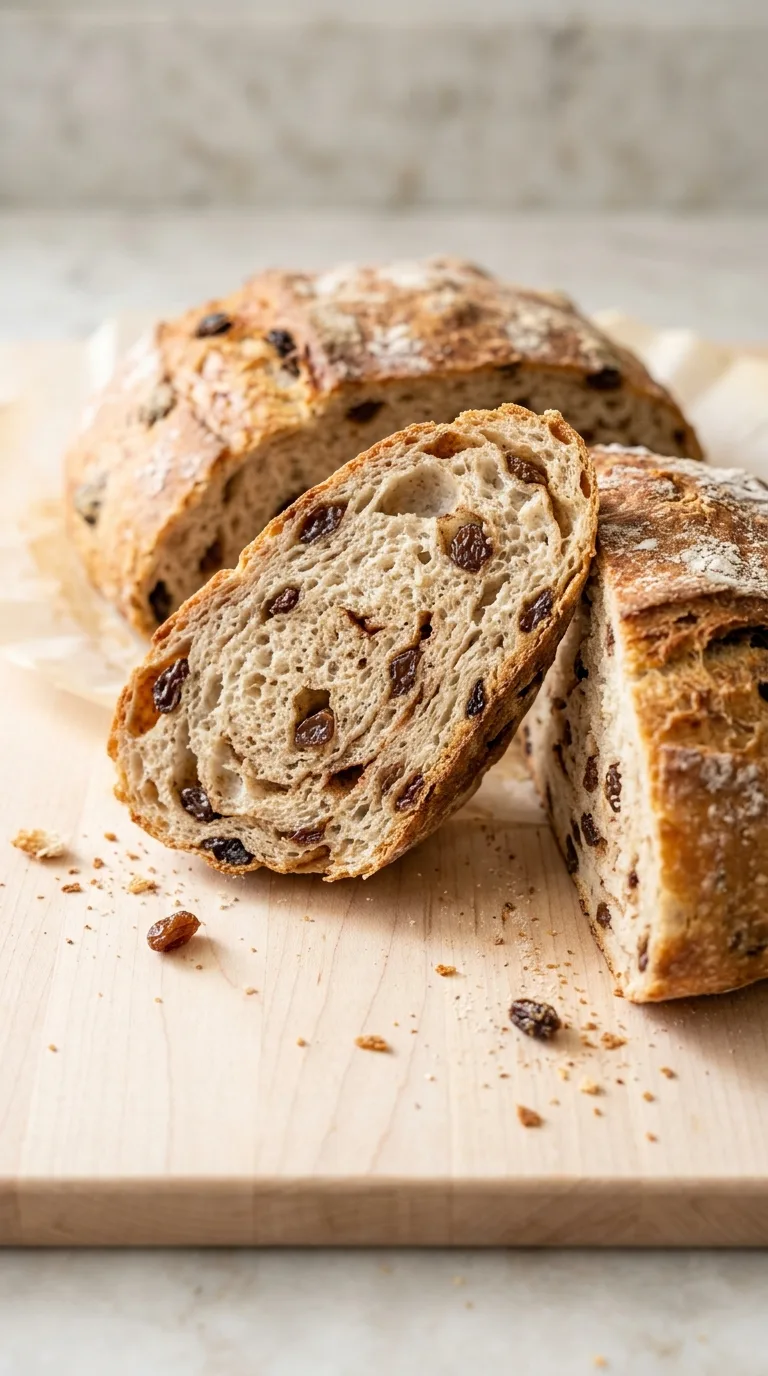
This recipe uses an overnight rise and a preheated Dutch oven to produce bakery-style results with minimal hands-on work. Mix the dough in the evening, let it rise for about 12 hours, then shape and bake it the following day.
Recipe at a Glance
- Prep Time: 15 minutes
- Cook Time: 45 minutes
- Additional Time: 13 hours 45 minutes
- Total Time: 14 hours 45 minutes
- Yield: 1 round loaf, about 12 slices
- Difficulty: Easy
Why This Recipe Works
- A long fermentation develops the dough without kneading.
- A wet dough produces an open, tender crumb.
- Cinnamon is mixed directly into the dough.
- Raisins add sweetness without weighing down the dough.
- A covered Dutch oven traps steam.
Essential Kitchen Tools
- Large mixing bowl, at least 4 quarts
- Sturdy wooden spoon or dough whisk
- Plastic wrap or reusable bowl cover
- Parchment paper
- 5- to 6-quart Dutch oven with oven-safe lid
- Bench scraper or flexible spatula
- Wire cooling rack
Ingredients That Matter
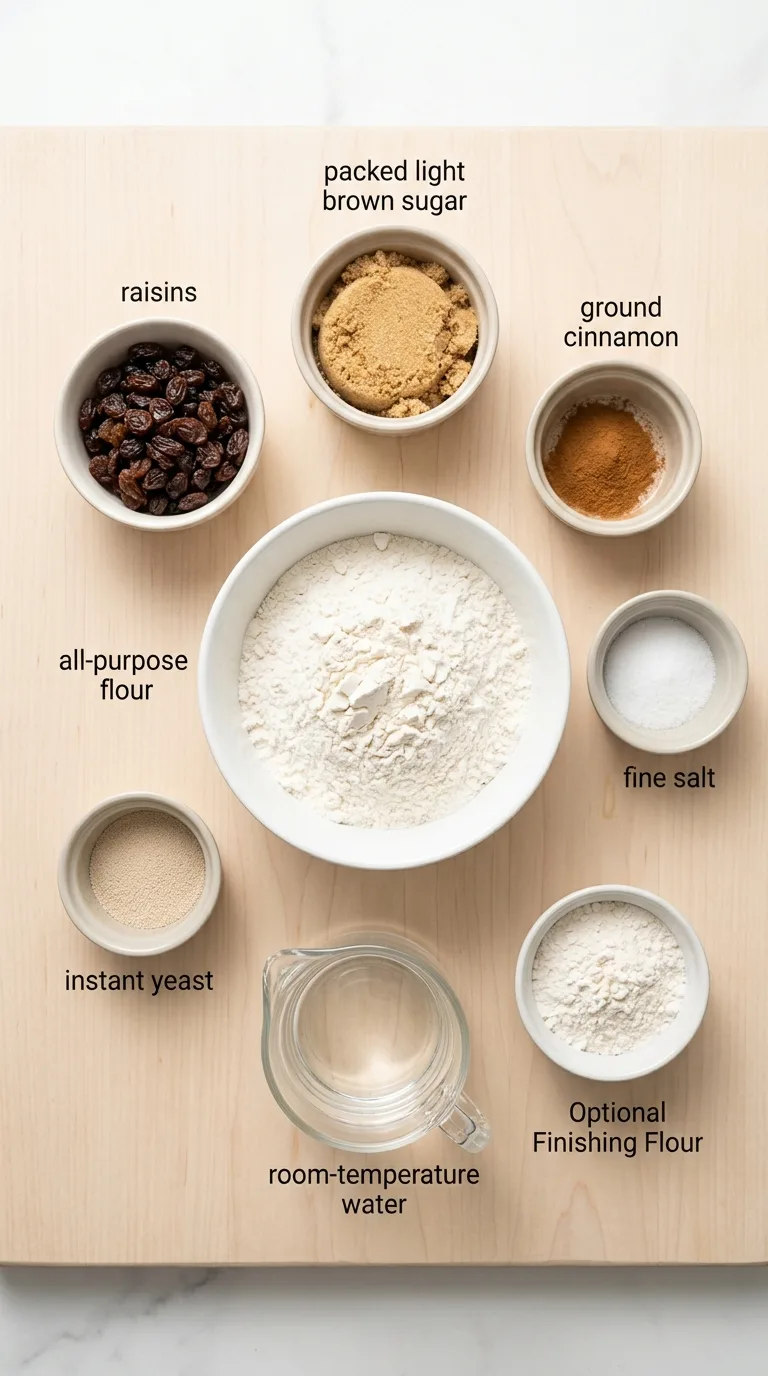
- 3 cups (375 g) all-purpose flour, spooned and leveled
- 2 tablespoons (25 g) packed light brown sugar
- 1½ teaspoons (about 4 g) ground cinnamon
- 1¼ teaspoons (about 7 g) fine salt
- ½ teaspoon (about 1.5 g) instant yeast
- ¾ cup (110 g) raisins
- 1½ cups (360 mL) room-temperature water, about 70–75°F (21–24°C)
- 1 tablespoon (8 g) all-purpose flour, optional, for lightly dusting the shaped loaf
Cooking Method
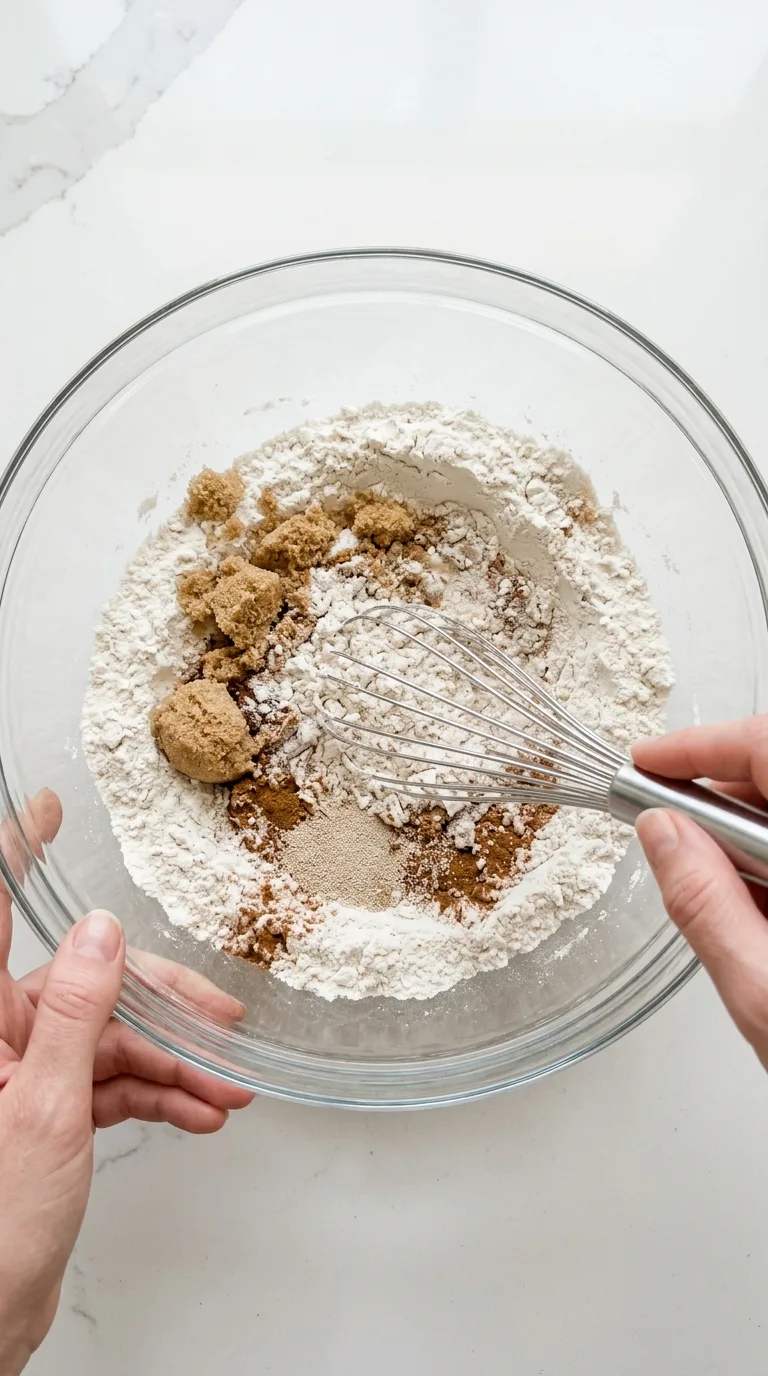
- In a large mixing bowl, whisk together the all-purpose flour, brown sugar, cinnamon, salt, and instant yeast. Add the raisins and toss them through the flour mixture so they are evenly distributed and lightly coated.

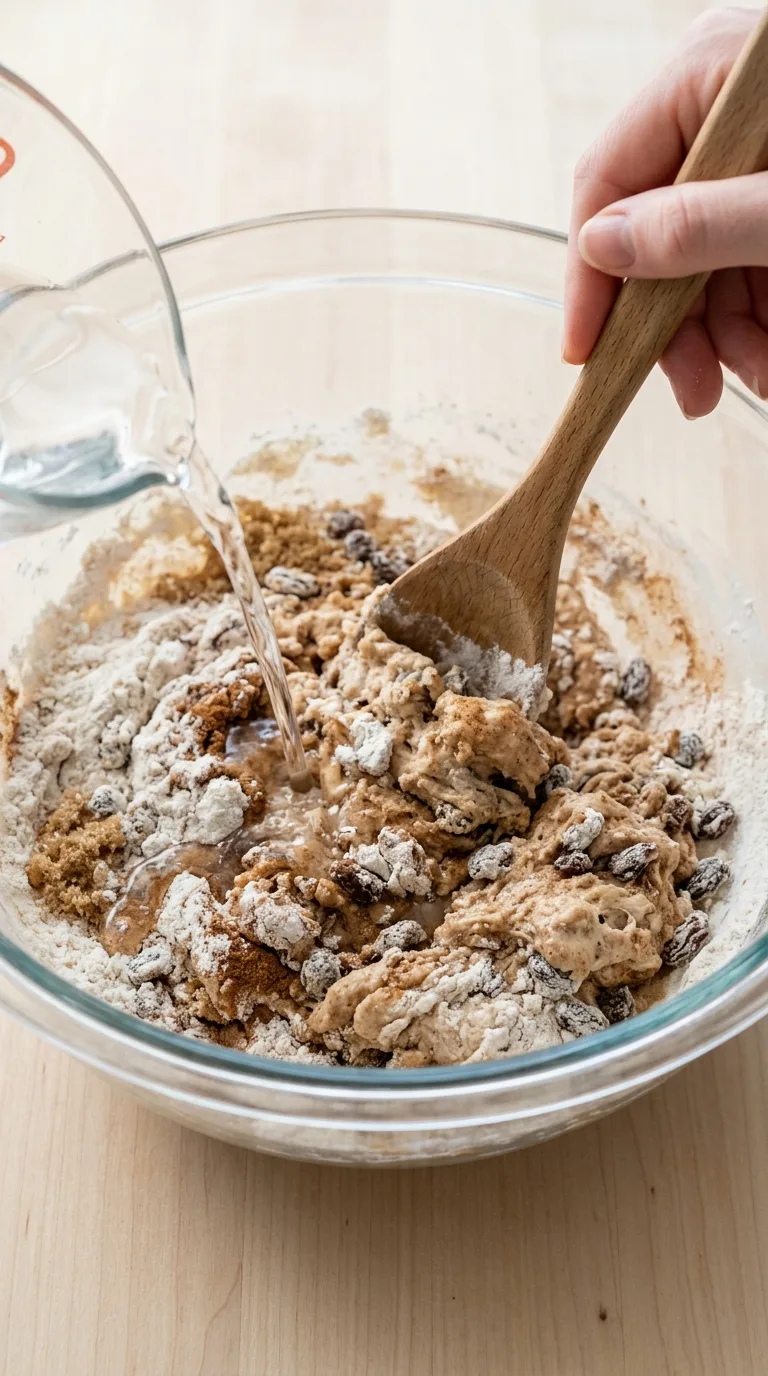
- Pour in the room-temperature water. Stir with a sturdy wooden spoon or dough whisk until no dry pockets of flour remain. The dough should look shaggy, sticky, and much wetter than traditional kneaded bread dough.
- Cover the bowl tightly with plastic wrap or a reusable cover. Let the dough stand at room temperature for about 12 hours in a room around 68–72°F (20–22°C).
- Lay a sheet of parchment paper on the counter and dust it very lightly with flour. Use a bench scraper or flexible spatula to loosen the dough from the bowl and turn it onto the parchment. With lightly floured hands, fold the outer edges toward the center several times to create a rough round loaf.
- Cover the shaped loaf loosely with a clean kitchen towel or overturned bowl. Let it rest for about 45 minutes.
- During the final 30 minutes of the second rise, place the empty Dutch oven and its lid in the oven. Preheat to 450°F (230°C).
- Once the Dutch oven is hot, carefully remove it from the oven and take off the lid. If desired, lightly dust the top of the dough with the optional flour. Using the parchment paper as a sling, carefully lower the shaped dough into the hot Dutch oven.
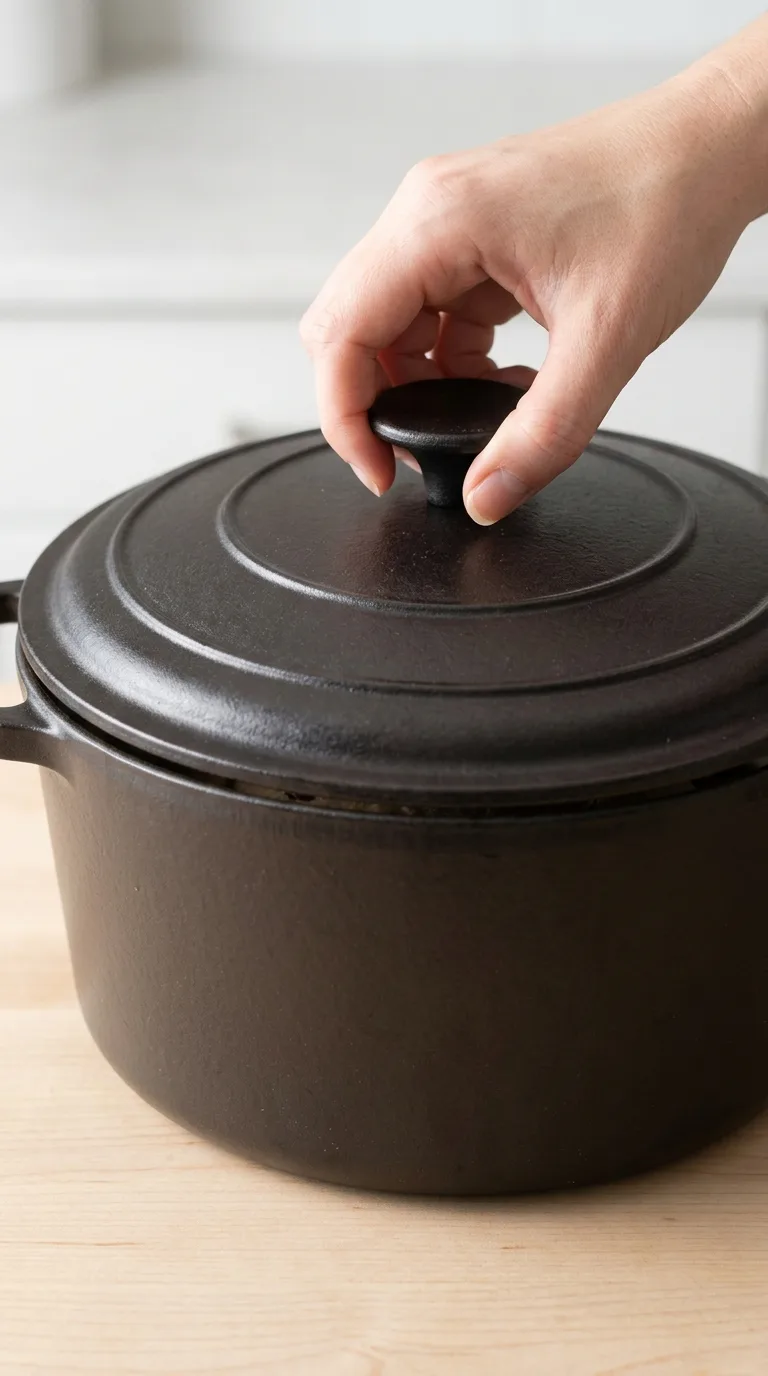
- Cover the Dutch oven and return it to the oven. Bake at 450°F (230°C) for 30 minutes.
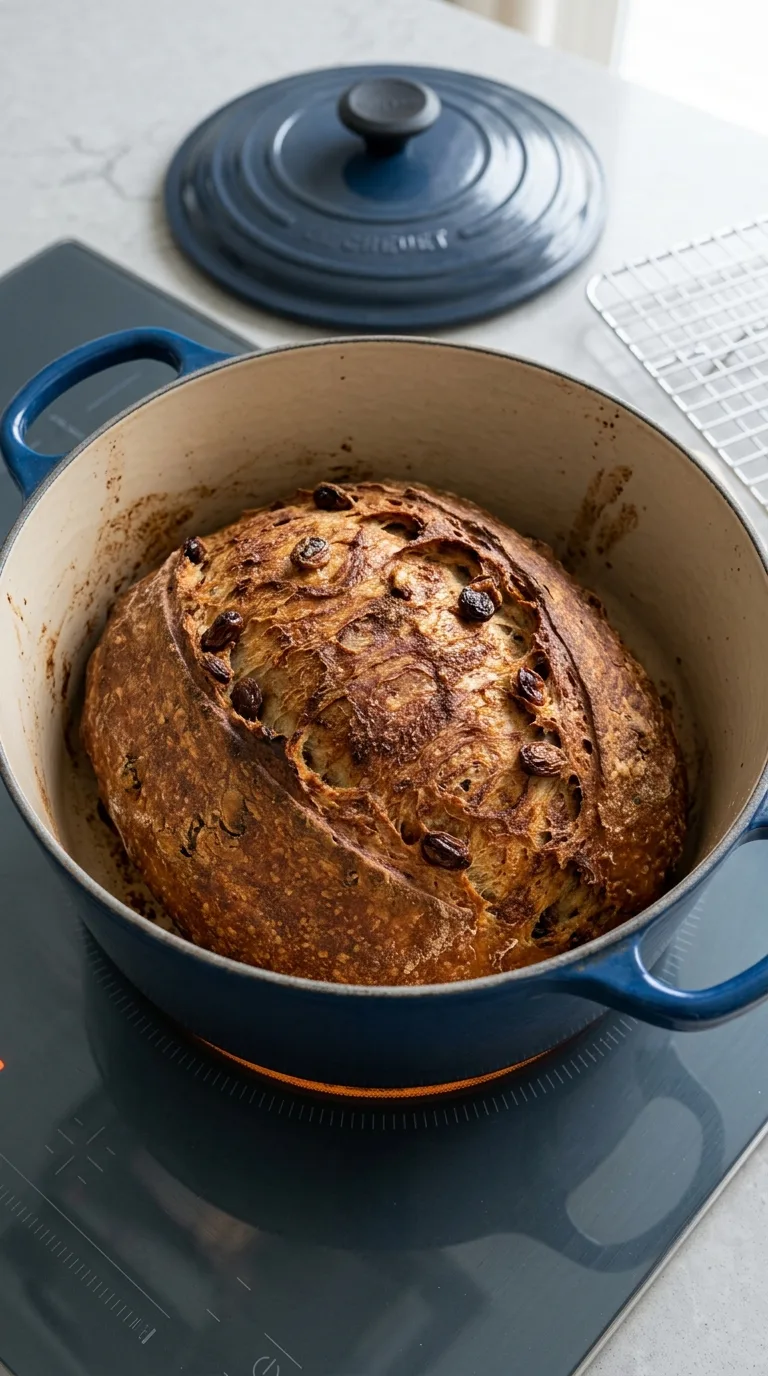
- Carefully remove the lid. Continue baking for 12–15 minutes, until the loaf is deeply golden brown and the crust feels firm.
- Use the parchment to lift the bread carefully from the Dutch oven and transfer it to a wire rack. Let the loaf cool for at least 1 hour before slicing.
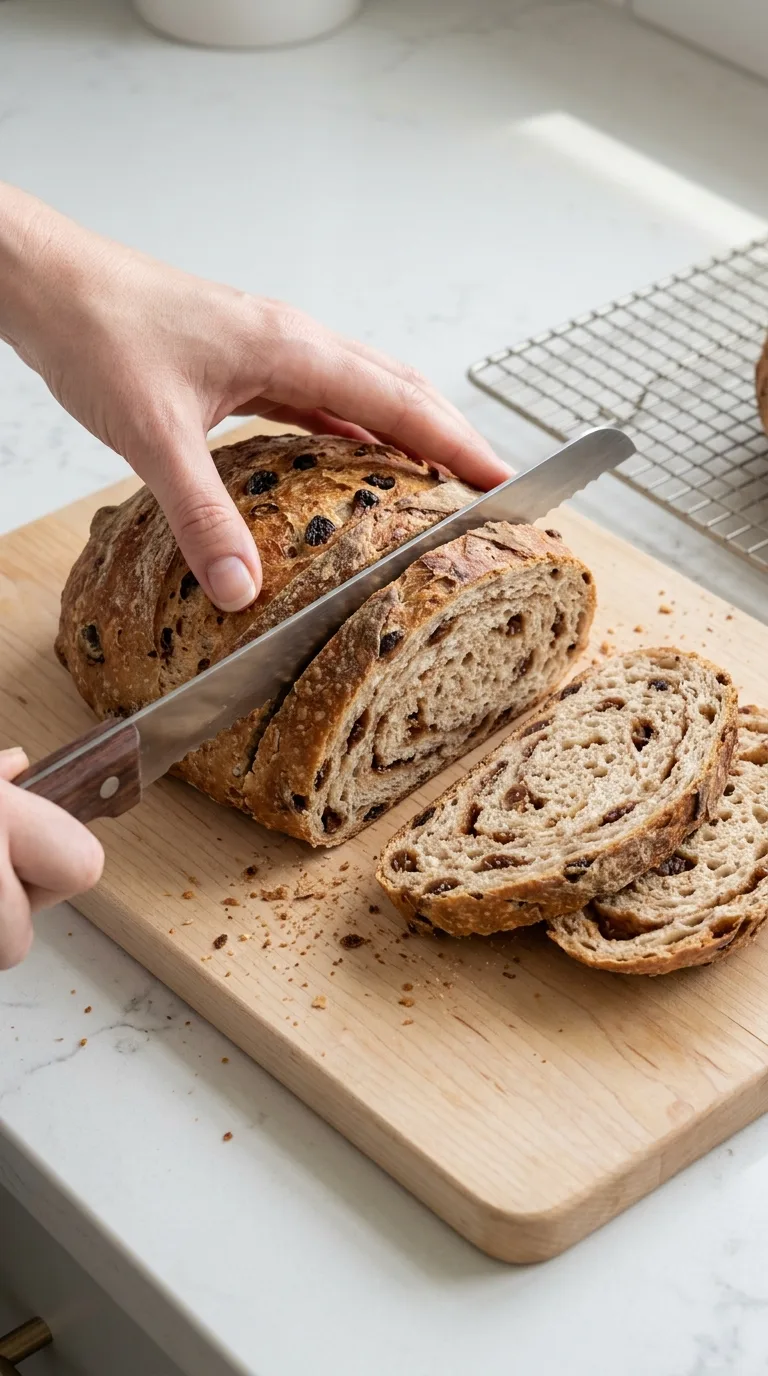
- Use a serrated bread knife to cut the cooled loaf into approximately 12 slices. Serve plain, toasted, or with butter.
Chef Notes for Better Results
- Do not make the dough too dry; sticky dough is expected in a no-knead loaf.
- Use the dough's appearance to judge the first rise; it should be visibly expanded and bubbly.
- Keep the cinnamon moderate; large amounts can interfere with yeast activity.
- Preheat the Dutch oven thoroughly to improve oven spring and crust development.
- Allow the loaf to cool fully before slicing to avoid a gummy texture.
Serving, Storage, and Prep-Ahead Tips
- Store the cooled loaf in a bread box or well-sealed container at room temperature for up to 3 days.
- For longer storage, slice the loaf and freeze it for up to 3 months.
- The dough can be mixed the evening before baking and allowed to ferment overnight.
FAQ
Can I make No Knead Cinnamon Raisin Bread without a Dutch oven?
Yes. Shape the loaf on parchment and bake it on a preheated baking stone or heavy baking sheet.
Why didn't my no-knead bread rise?
The yeast may be old, the room may have been too cold, or the fermentation may not have been long enough.
Can I add more raisins?
Yes, but keep the total to about 1 cup (145 g) to avoid difficulty in shaping.
Can I use whole-wheat flour?
Yes. Replace up to 1 cup (125 g) of the all-purpose flour with whole-wheat flour.
Why is my Cinnamon Raisin Bread gummy inside?
The bread may have been underbaked or sliced before it finished cooling.