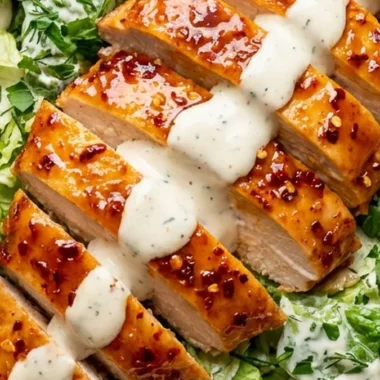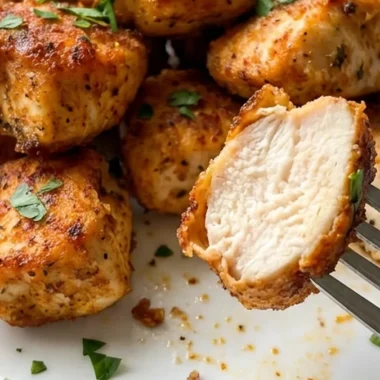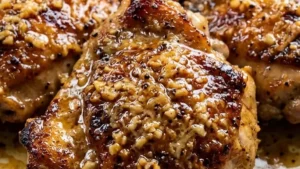
Garlic Parmesan Chicken is a stovetop dinner made with golden chicken cutlets and a creamy garlic-Parmesan sauce. The chicken develops a lightly browned exterior while the sauce stays smooth, savory, and rich with fresh garlic, Parmesan, cream, and a small splash of lemon.
Using thin chicken cutlets keeps the cooking time short and helps the meat cook evenly. The sauce is made in the same skillet, so the browned bits left from the chicken add extra flavor without requiring a separate pan.
Why This Recipe Works
Thin chicken cutlets cook quickly and evenly, reducing the chance of a dry exterior and undercooked center.
Light flouring encourages browning and leaves a small amount of starch in the skillet to help the sauce cling to the chicken.
Cooking the garlic briefly in butter builds flavor without allowing it to become bitter.
Heavy cream provides a stable base for finely grated Parmesan and creates a smooth, spoon-coating sauce.
Adding Parmesan over low heat helps prevent the cheese from clumping or turning grainy.
Equipment Needed
- 12-inch heavy-bottomed skillet
- Shallow bowl or plate
- Tongs
- Whisk
- Fine grater
- Chef’s knife and cutting board
- Instant-read meat thermometer
Ingredients List
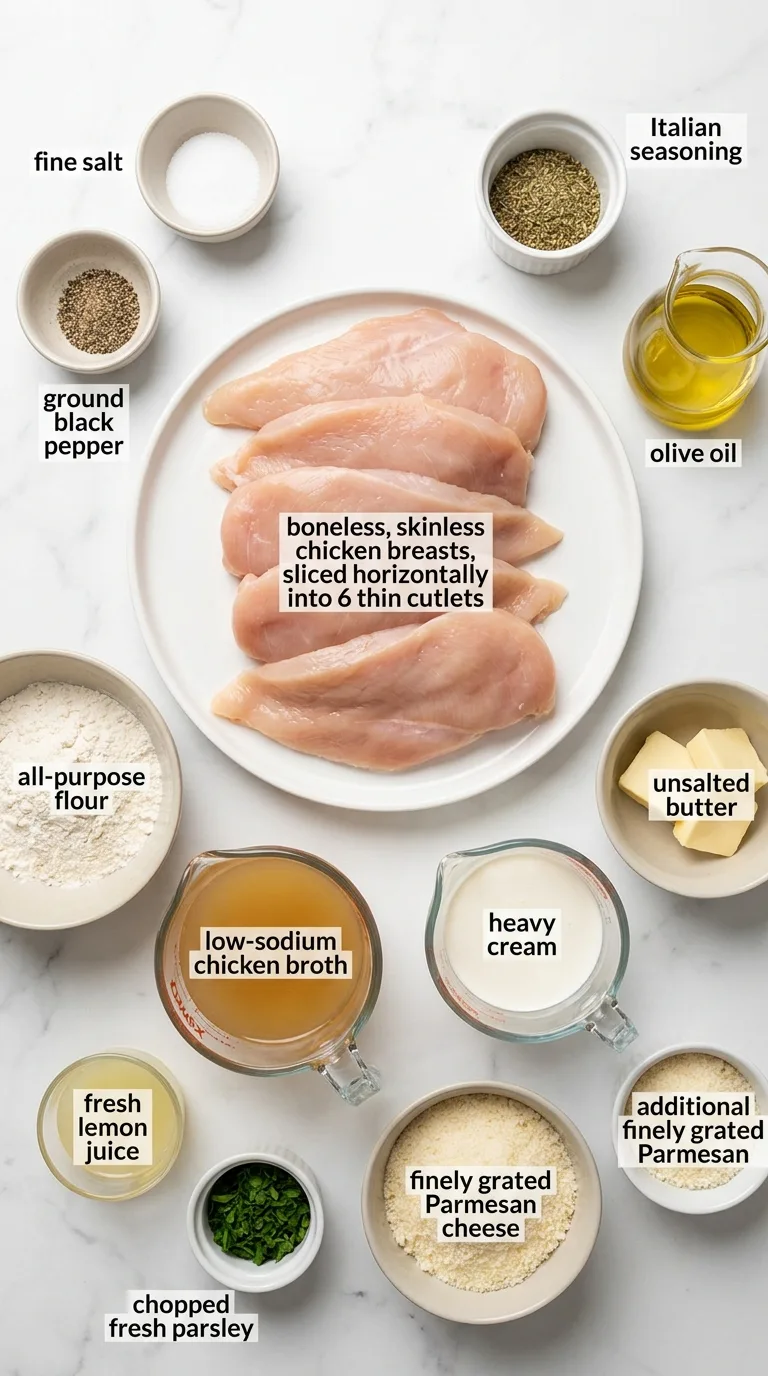
For the Chicken
- 1 1/2 pounds (680 g) boneless, skinless chicken breasts, sliced horizontally into 6 thin cutlets
- 1 teaspoon fine salt, divided
- 1/2 teaspoon ground black pepper
- 1 teaspoon Italian seasoning
- 1/3 cup (40 g) all-purpose flour
- 1 tablespoon (15 ml) olive oil
- 1 tablespoon (14 g) unsalted butter
For the Garlic Parmesan Sauce
- 2 tablespoons (28 g) unsalted butter
- 5 garlic cloves, finely minced
- 1 cup (240 ml) low-sodium chicken broth
- 1 cup (240 ml) heavy cream
- 1 cup (90 g) finely grated Parmesan cheese
- 1 tablespoon (15 ml) fresh lemon juice
- 1/4 teaspoon fine salt
Optional Garnishes
- 2 tablespoons (8 g) chopped fresh parsley, optional
- 1/4 cup (20 g) additional finely grated Parmesan, optional
- Crushed red pepper flakes, optional
Ingredient Notes and Substitutions
Chicken breasts: Thin chicken breast cutlets cook evenly and give the sauce plenty of surface area to coat. Boneless, skinless chicken thighs can be substituted in the same weight, though they may need slightly longer cooking and will have a richer flavor.
Parmesan: Freshly and finely grated Parmesan melts more smoothly than coarse or pre-shredded cheese. Pecorino Romano can replace part of the Parmesan, but it is sharper and saltier, so reduce the added salt.
Heavy cream: Heavy cream creates a rich, stable sauce that is less likely to separate. Half-and-half can be substituted, but the sauce will be thinner and should be kept at a very gentle simmer.
Garlic: Fresh garlic provides the strongest savory aroma and flavor. About 1 1/2 teaspoons garlic powder can be substituted in a pinch, but the sauce will taste less fresh and slightly more uniform.
Chicken broth: Low-sodium chicken broth loosens the sauce and adds savory flavor. Vegetable broth can be used instead, although the sauce will have a slightly lighter chicken flavor.
Step-by-Step Instructions
Step 1: Prepare the chicken
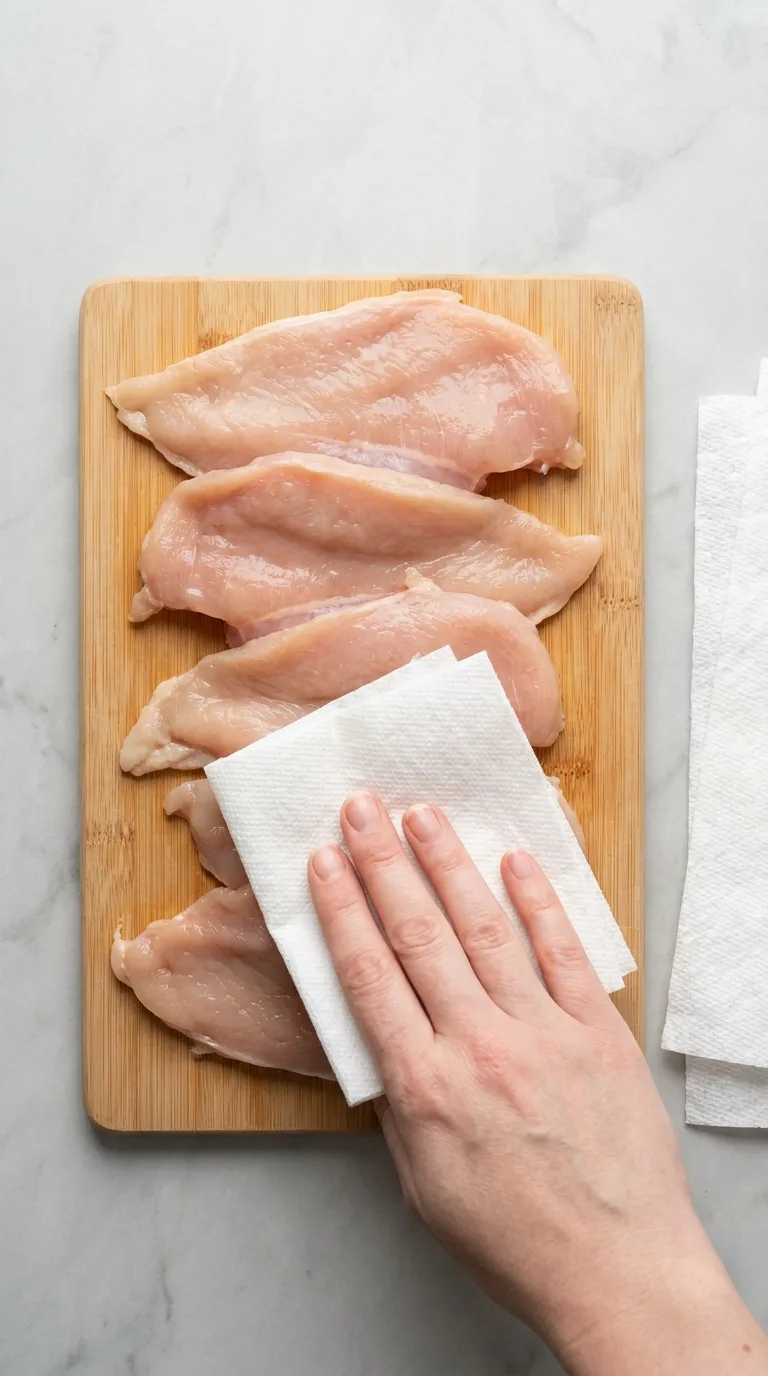
Pat the chicken cutlets dry with paper towels. Season both sides with 3/4 teaspoon of the salt, all of the black pepper, and the Italian seasoning.
Step 2: Lightly flour the chicken
Place the flour in a shallow bowl or plate. Coat each chicken cutlet lightly on both sides, shaking off the excess. The surface should have a thin, dry coating rather than a heavy breading.
Step 3: Heat the skillet
Heat the olive oil and 1 tablespoon (14 g) butter in a 12-inch skillet over medium-high heat until the butter is melted and beginning to foam.
Step 4: Brown the chicken
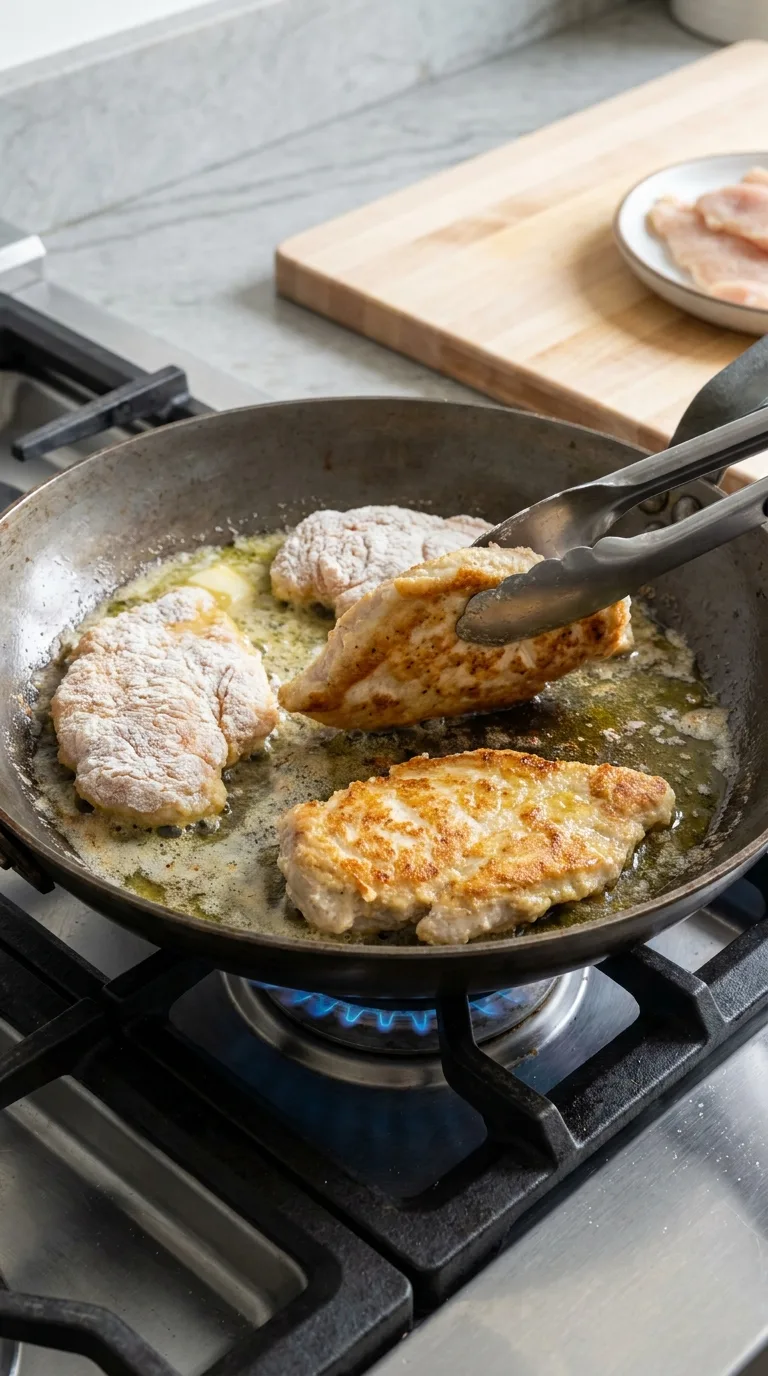
Add the chicken in a single layer, working in two batches if necessary. Cook for 3 to 4 minutes on the first side until golden brown.
Step 5: Finish cooking the chicken
Turn and cook for another 2 to 4 minutes, until the thickest portion reaches 165°F (74°C). Transfer the chicken to a clean plate.
Step 6: Rest the chicken
Let the chicken rest for 5 minutes while preparing the sauce. Do not wipe out the skillet unless the browned bits look burned.
Step 7: Cook the garlic
Reduce the heat to medium-low and add the remaining 2 tablespoons (28 g) butter. Once melted, add the garlic and cook for about 30 seconds, stirring constantly, until fragrant.
Step 8: Deglaze the skillet
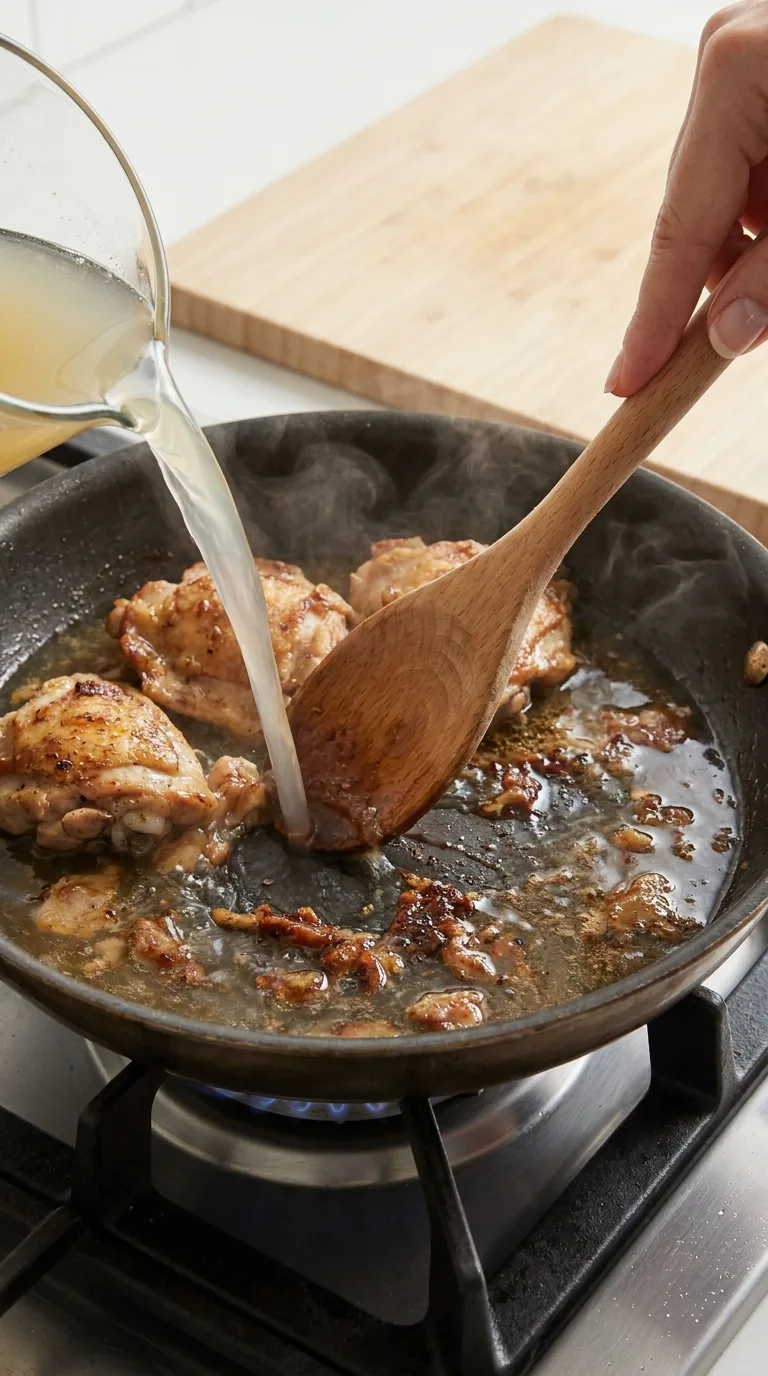
Pour in the chicken broth and scrape the bottom of the skillet with a wooden spoon or spatula to loosen the browned bits.
Step 9: Reduce the broth
Simmer over medium heat for 3 to 4 minutes, until the liquid has reduced slightly.
Step 10: Add the cream
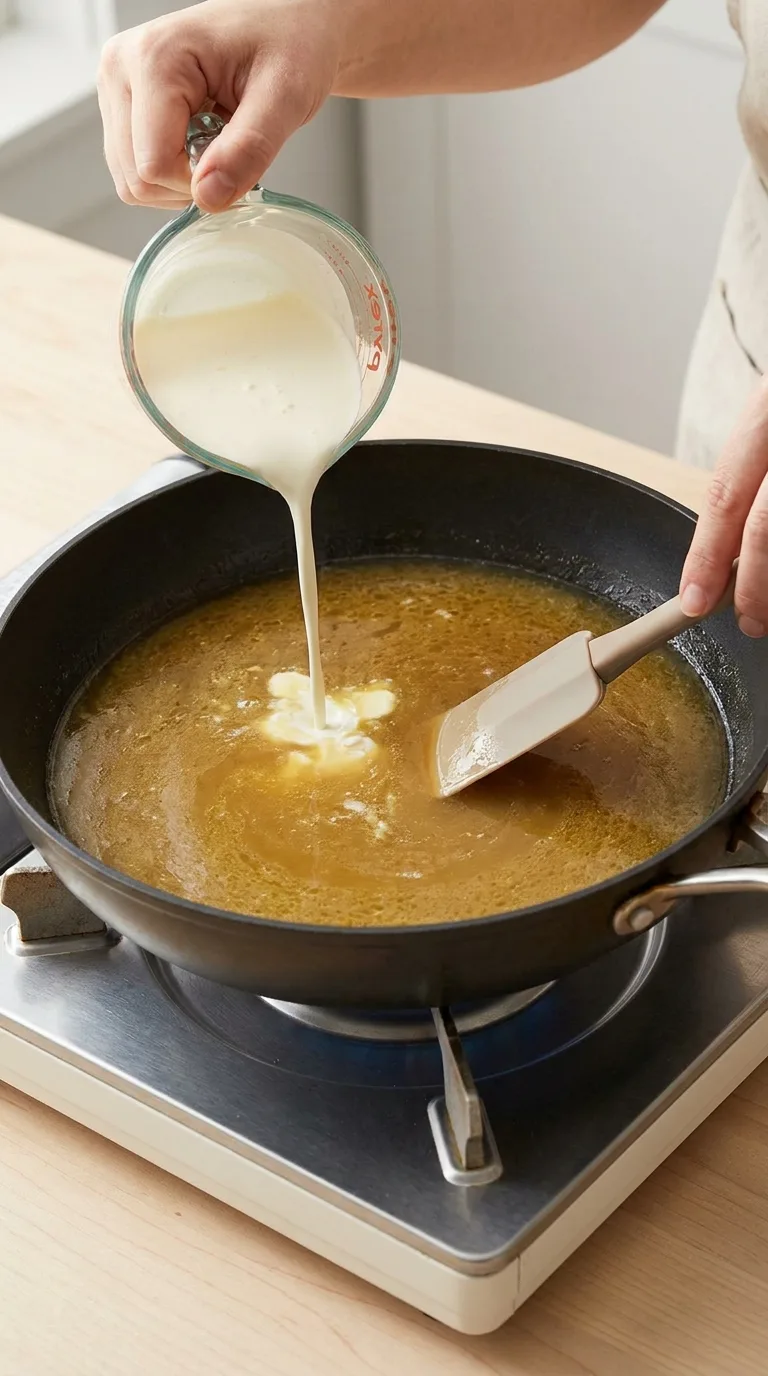
Reduce the heat to medium-low and pour in the heavy cream. Stir in the remaining 1/4 teaspoon salt and simmer gently for 2 to 3 minutes. Do not allow the sauce to boil aggressively.
Step 11: Add the Parmesan
Reduce the heat to low. Add the 1 cup (90 g) Parmesan in three additions, whisking until each portion melts before adding the next. The sauce should become smooth and thick enough to coat the back of a spoon.
Step 12: Finish with lemon
Stir in the lemon juice. Taste the sauce before adding any extra seasoning because Parmesan contributes additional salt.
Step 13: Return the chicken
Place the cooked chicken back into the skillet along with any juices from the plate. Spoon the sauce over the cutlets.
Step 14: Warm through
Cook over low heat for 1 to 2 minutes, just until the chicken is hot and thoroughly coated. If the sauce becomes too thick, add 1 to 2 tablespoons (15 to 30 ml) chicken broth.
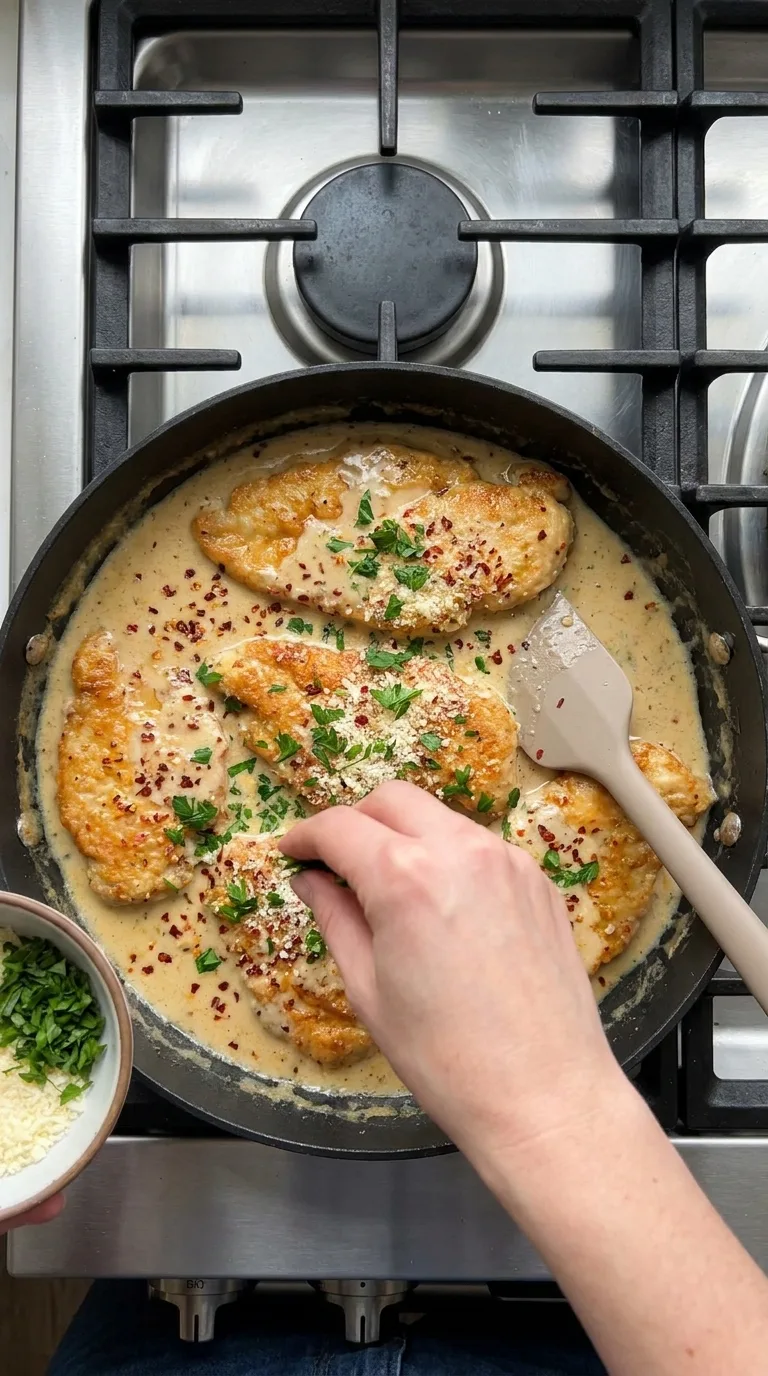
Step 15: Garnish and serve
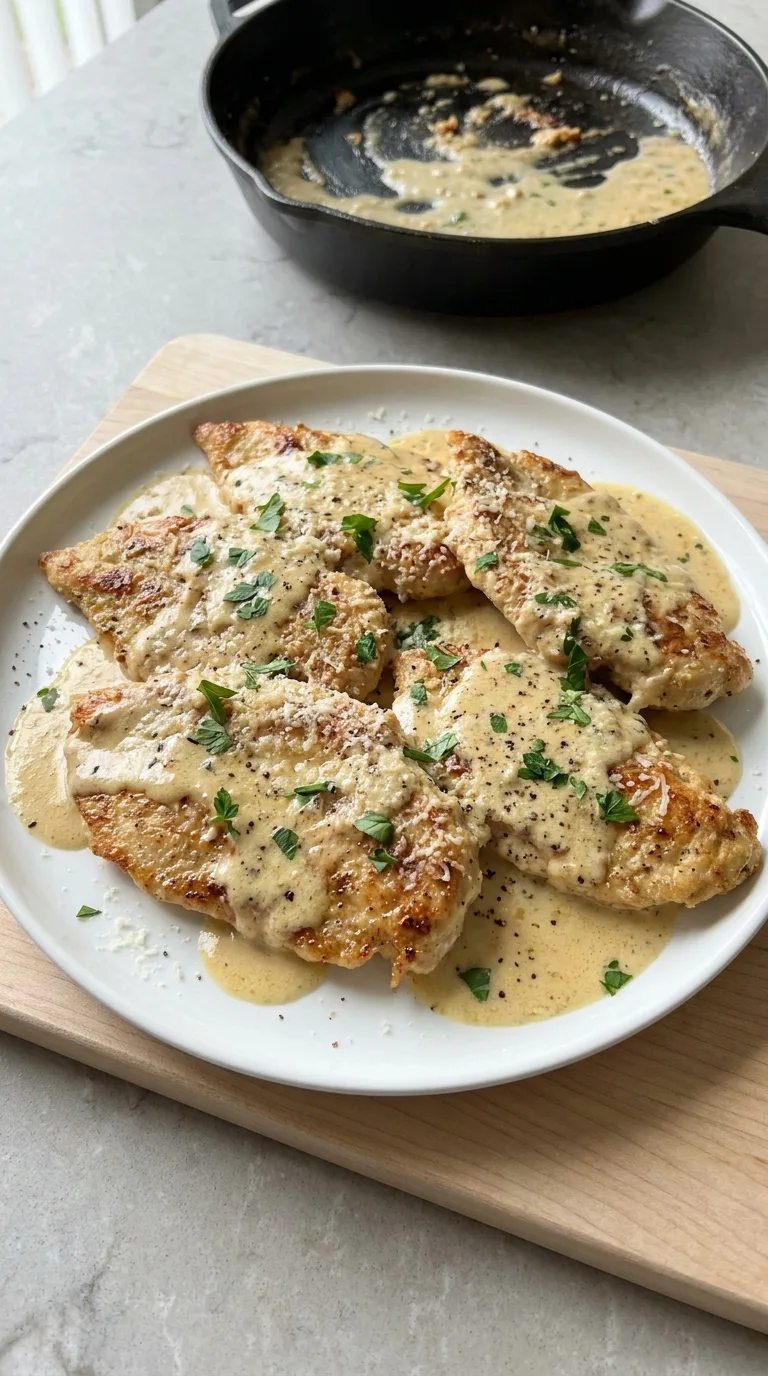
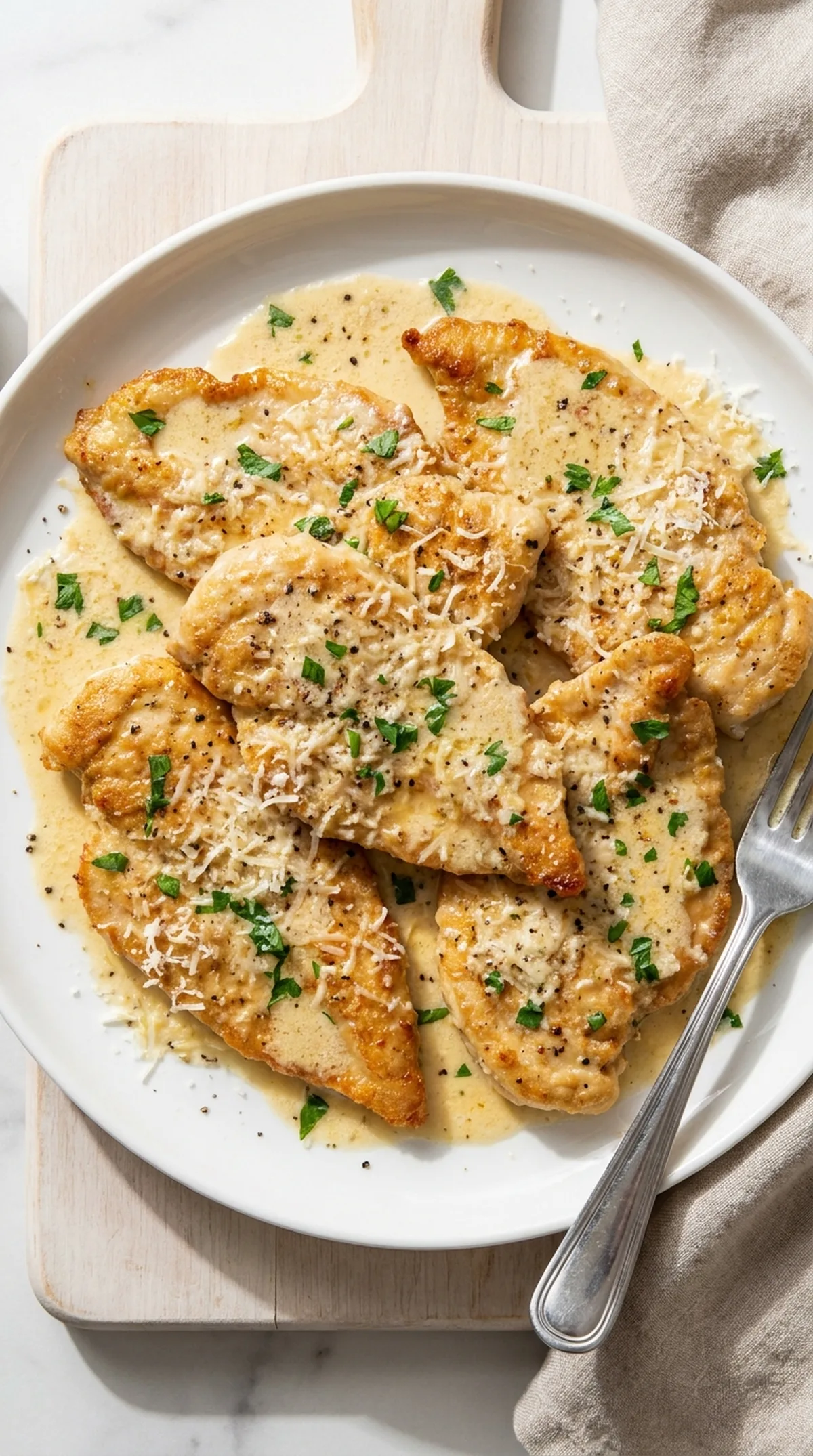
Remove from the heat and garnish with parsley, additional Parmesan, or crushed red pepper flakes if desired. Serve immediately.
Storage, Freezing, and Make-Ahead Instructions
Cool leftover Garlic Parmesan Chicken promptly and transfer it to an airtight container within 2 hours. Refrigerate for up to 4 days.
Reheat gently in a covered skillet over low heat with 1 to 2 tablespoons (15 to 30 ml) chicken broth or cream to loosen the sauce. Heat until the chicken reaches 165°F (74°C).
Freezing is not recommended because cream-and-Parmesan sauces can separate and become grainy after thawing.
For make-ahead preparation, slice and season the chicken up to 1 day ahead and refrigerate it in an airtight container. The Parmesan can also be grated ahead. For the smoothest texture, prepare the sauce shortly before serving.
FAQ
Can I make Garlic Parmesan Chicken ahead of time?
You can prepare and season the chicken up to 1 day ahead. For the smoothest sauce, cook the chicken and make the garlic-Parmesan sauce shortly before serving.
Can I use chicken thighs?
Yes. Boneless, skinless chicken thighs can replace the chicken breasts in the same weight. Cook them until they reach at least 165°F (74°C).
Why did my Parmesan sauce become grainy?
The sauce was likely too hot when the cheese was added. Keep the heat low and add finely grated Parmesan gradually while whisking.
Can I make this without heavy cream?
Half-and-half can be used, but the sauce will be thinner and more prone to separation. Keep it at a gentle simmer and avoid boiling after adding the Parmesan.
What can I serve with Garlic Parmesan Chicken?
Mashed potatoes, pasta, rice, roasted potatoes, steamed broccoli, green beans, asparagus, or crusty bread all work well with the creamy sauce.
Ingredients
Method
- Pat the chicken cutlets dry with paper towels: Season both sides with 3/4 teaspoon of the salt, all of the black pepper, and the Italian seasoning.
- Place the flour in a shallow bowl or plate. Coat each chicken cutlet lightly on both sides, shaking off the excess. The surface should have a thin, dry coating rather than a heavy breading.
- Heat the olive oil and 1 tablespoon (14 g) butter in a 12-inch skillet over medium-high heat until the butter is melted and beginning to foam.
- Add the chicken in a single layer, working in two batches if necessary. Cook for 3 to 4 minutes on the first side until golden brown.
- Turn and cook for another 2 to 4 minutes, until the thickest portion reaches 165°F (74°C). Transfer the chicken to a clean plate.
- Let the chicken rest for 5 minutes while preparing the sauce. Do not wipe out the skillet unless the browned bits look burned.
- Reduce the heat to medium-low and add the remaining 2 tablespoons (28 g) butter. Once melted, add the garlic and cook for about 30 seconds, stirring constantly, until fragrant.
- Pour in the chicken broth and scrape the bottom of the skillet with a wooden spoon or spatula to loosen the browned bits.
- Simmer over medium heat for 3 to 4 minutes, until the liquid has reduced slightly.
- Reduce the heat to medium-low and pour in the heavy cream. Stir in the remaining 1/4 teaspoon salt and simmer gently for 2 to 3 minutes. Do not allow the sauce to boil aggressively.
- Reduce the heat to low: Add the 1 cup (90 g) Parmesan in three additions, whisking until each portion melts before adding the next. The sauce should become smooth and thick enough to coat the back of a spoon.
- Stir in the lemon juice: Taste the sauce before adding any extra seasoning because Parmesan contributes additional salt.
- Place the cooked chicken back into the skillet along with any juices from the plate. Spoon the sauce over the cutlets.
- Cook over low heat for 1 to 2 minutes, just until the chicken is hot and thoroughly coated. If the sauce becomes too thick, add 1 to 2 tablespoons (15 to 30 ml) chicken broth.
- Remove from the heat and garnish with parsley, additional Parmesan, or crushed red pepper flakes if desired. Serve immediately.

Gordon Calloway
Founder and recipe developer behind Home Chef Recipes in Chicago, Illinois—bringing bold flavor, clear heat-control cues, and no-fluff technique to everyday home cooking.