
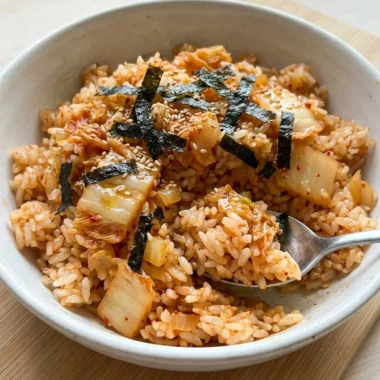
Flavorful Kimchi Fried Rice Recipe (Kimchi Bokkeumbap) is a savory Korean rice dish made with well-fermented kimchi, chilled cooked rice, gochujang, garlic, green onions, soy sauce, and toasted sesame oil. The rice develops lightly crisp edges in the skillet while the kimchi adds tangy, spicy flavor and a satisfying bit of texture.
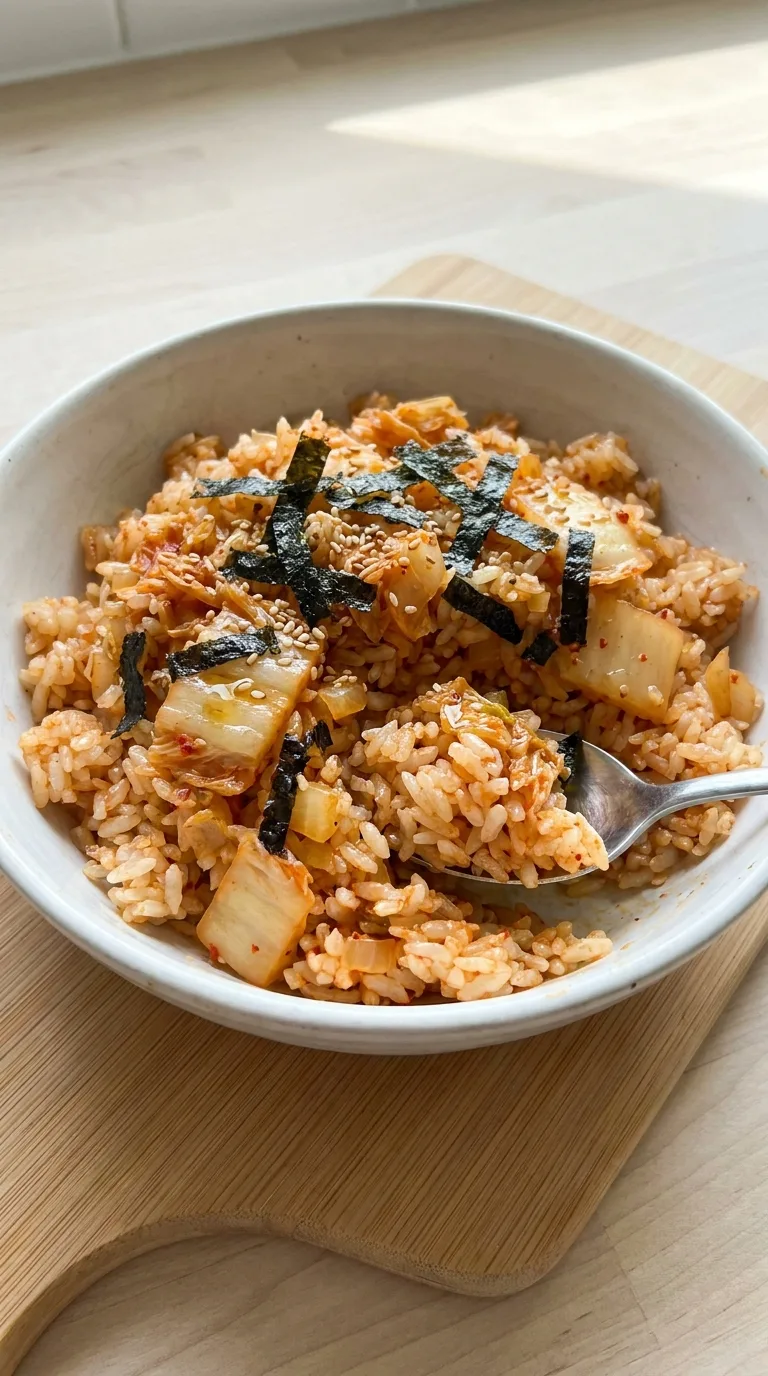
Cold cooked rice works especially well because the grains are firmer and less likely to become mushy while frying. A fried egg on top adds richness, while sesame oil, green onions, and optional roasted seaweed give the finished dish an aromatic, savory finish.
Recipe at a Glance
- Prep Time: 15 minutes
- Cook Time: 20 minutes
- Additional Time: 5 minutes
- Total Time: 40 minutes
- Yield: About 6 cups fried rice
- Servings: 4
- Category: Dinner
- Cuisine: Korean
- Cooking Method: Stovetop
- Difficulty: Easy
Why You'll Love This Recipe
- Chilled cooked rice has less surface moisture than freshly cooked rice, helping the grains fry rather than steam together.
- Well-fermented kimchi provides acidity, chile flavor, and savory depth without requiring a long ingredient list.
- Cooking the kimchi before adding the rice evaporates excess moisture and concentrates its flavor.
- Gochujang and kimchi juice coat the rice with spicy, fermented flavor and an appealing reddish-orange color.
- Toasted sesame oil is added near the end so its nutty aroma remains noticeable rather than cooking away.
Equipment Needed
- 12-inch wok or large heavy-bottomed skillet
- Nonstick skillet, for frying the eggs
- Small mixing bowl
- Wooden spoon or heat-resistant spatula
- Chef’s knife and cutting board
Ingredients You'll Need
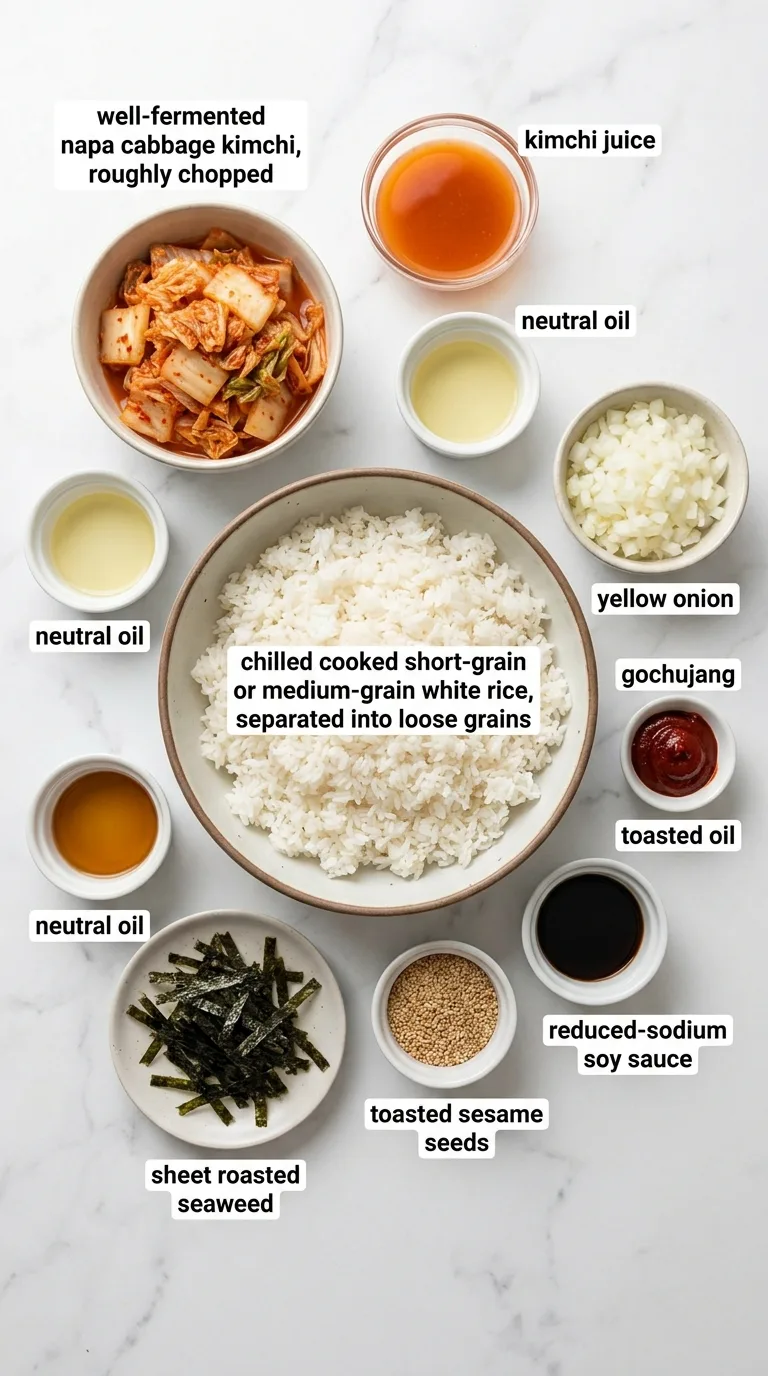
For the Kimchi Fried Rice
- ■ 4 cups (640 g) chilled cooked short-grain or medium-grain white rice, separated into loose grains
- ■ 1 1/2 cups (225 g) well-fermented napa cabbage kimchi, roughly chopped
- ■ 1/4 cup (60 ml) kimchi juice
- ■ 2 tablespoons (30 ml) neutral oil, such as avocado or canola oil, divided
- ■ 1/2 medium yellow onion, about 3 ounces (85 g), finely diced
- ■ 3 garlic cloves, minced
- ■ 3 green onions, thinly sliced, white and green parts separated
- ■ 1 tablespoon (18 g) gochujang
- ■ 1 tablespoon (15 ml) reduced-sodium soy sauce
- ■ 2 teaspoons (10 ml) toasted sesame oil
For the Fried Eggs
- ■ 4 large eggs
- ■ 1 teaspoon (5 ml) neutral oil
Optional Garnishes
- ■ 1 tablespoon (9 g) toasted sesame seeds, optional
- ■ 1 sheet roasted seaweed, about 0.1 ounce (3 g), cut into thin strips, optional
- ■ Additional sliced green onions, optional
How to Make Kimchi Fried Rice
Prepare the Rice
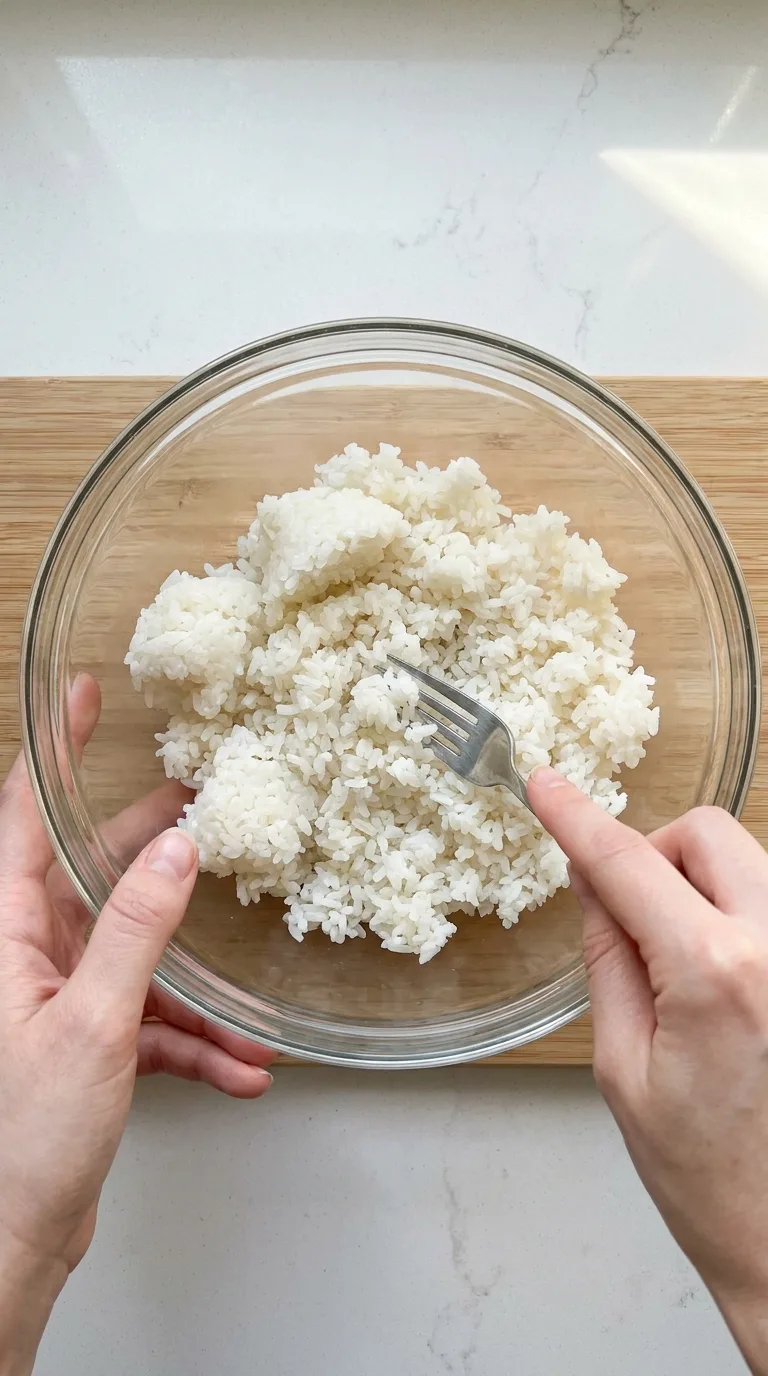
Remove the chilled rice from the refrigerator and break apart any large clumps with clean fingers or a fork. The grains should be loose enough to spread easily through the skillet.
Prepare the Kimchi Sauce
In a small bowl, stir together the kimchi juice, gochujang, and soy sauce until the gochujang is mostly dissolved. This mixture will add depth and flavor to the rice.
Heat the Skillet
Heat 1 tablespoon (15 ml) neutral oil in a 12-inch wok or large skillet over medium-high heat until shimmering. This ensures the oil is hot enough to create a good sear on the ingredients.
Cook the Onion and Green Onion Whites
Add the diced onion and white parts of the green onions. Cook for 2 to 3 minutes, stirring frequently, until the onion is softened and lightly translucent. This step builds a flavorful base for the fried rice.
Add the Garlic
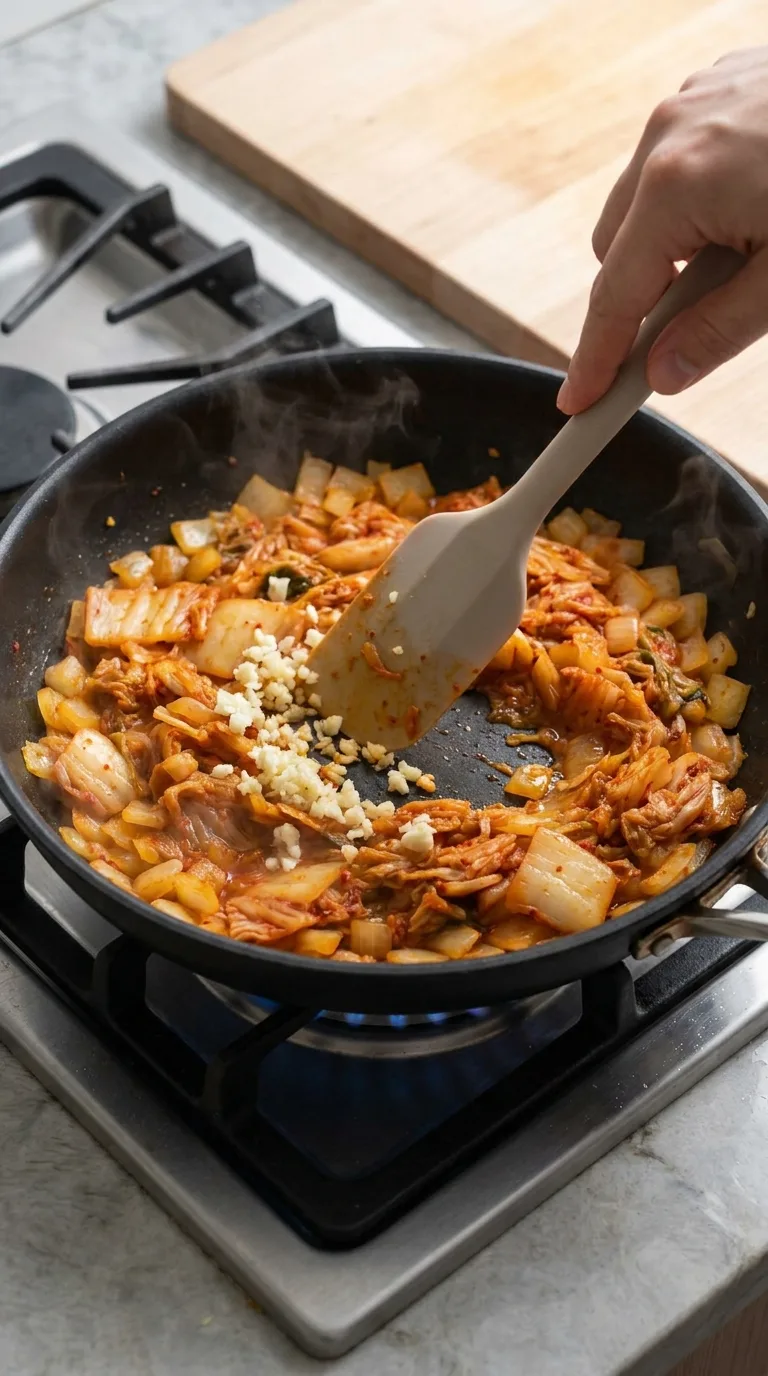
Stir in the minced garlic and cook for about 30 seconds, until fragrant but not browned. Overcooking garlic can lead to bitterness, so keep an eye on it.
Cook the Kimchi
Add the chopped kimchi and stir-fry for 3 to 4 minutes. Some moisture should evaporate, and the edges of the kimchi should begin to soften and lightly caramelize, enhancing its flavor.
Add the Rice
Add the chilled rice and remaining 1 tablespoon (15 ml) neutral oil. Toss and press the rice through the kimchi mixture until the grains are separated and evenly distributed. This helps to ensure that every grain is coated with flavor.
Season the Rice
Pour the kimchi juice, gochujang, and soy sauce mixture over the rice. Toss thoroughly until the grains are evenly coated and turn reddish-orange. This step is crucial for achieving the dish’s signature color and flavor.
Fry Until Lightly Crisp
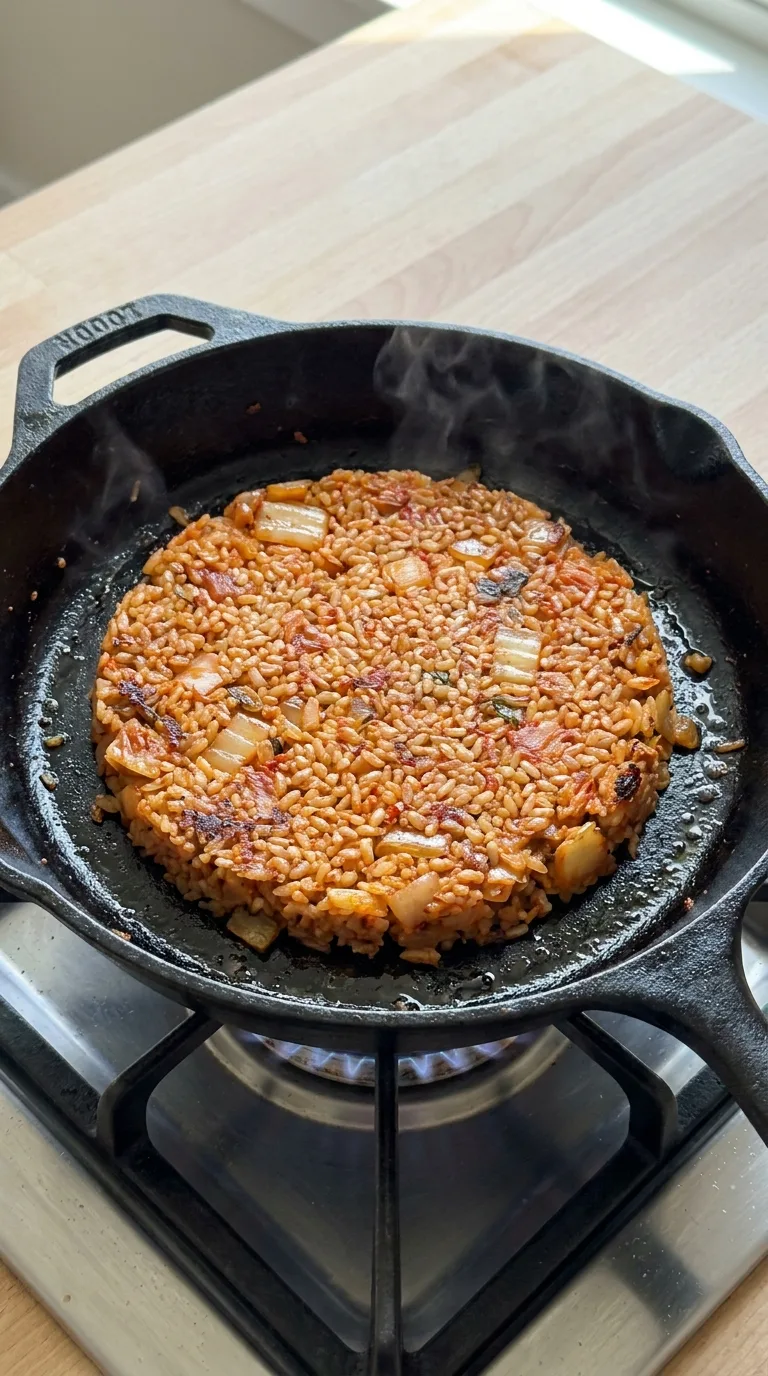
Spread the rice into an even layer and let it cook undisturbed for 1 to 2 minutes. Toss, spread again, and cook for another 1 to 2 minutes. The rice should be steaming hot with a few lightly browned, crisp areas, adding texture to the dish.
Finish with Sesame Oil
Remove the skillet from direct heat. Stir in the toasted sesame oil and most of the green onion tops, reserving a small amount for garnish. This adds a nutty aroma that enhances the overall flavor.
Fry the Eggs
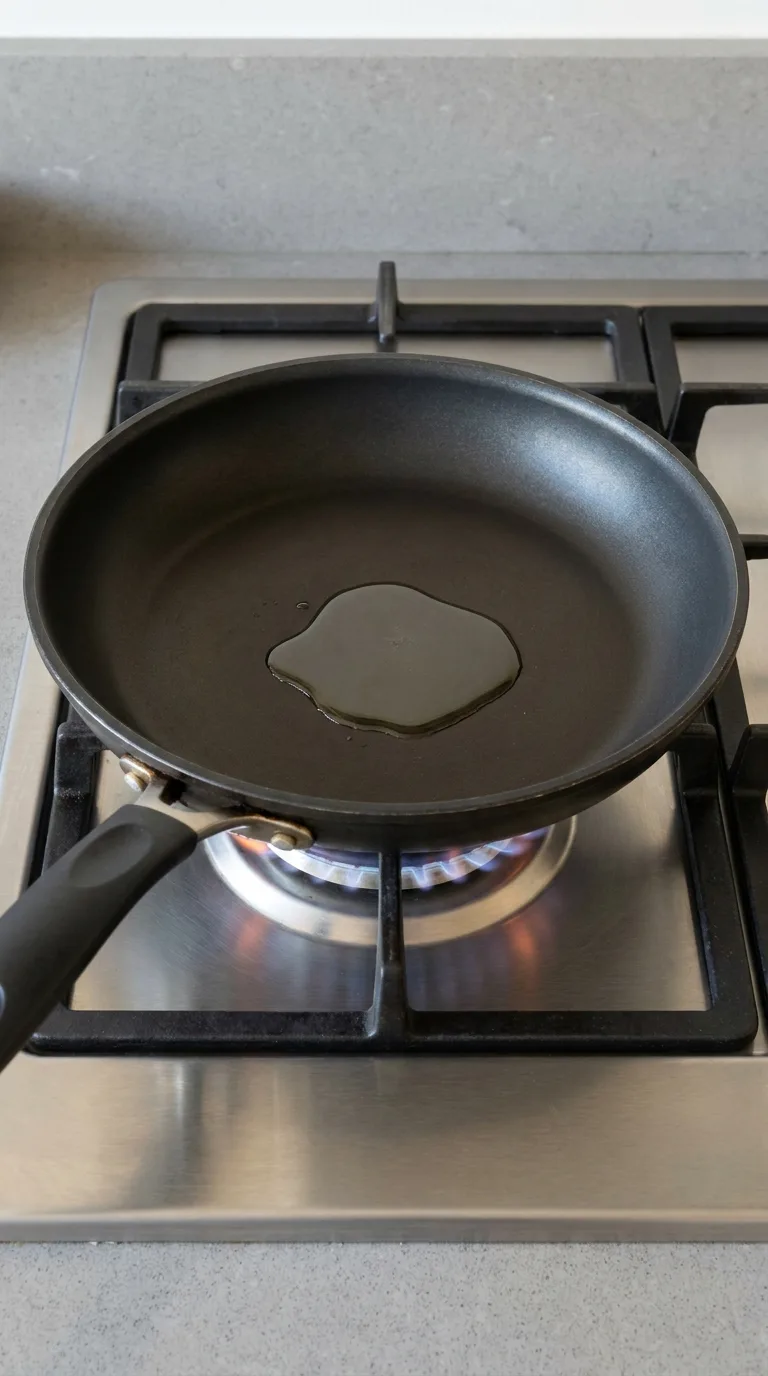
Heat 1 teaspoon (5 ml) neutral oil in a nonstick skillet over medium-low heat. Crack in the eggs and cook until the whites are fully set and the yolks reach your preferred doneness. For fully cooked eggs, cook until the yolks reach 160°F (71°C).
Rest the Rice Briefly
Let the fried rice stand off the heat for 5 minutes. The grains will settle slightly while remaining hot, allowing the flavors to meld.
Serve
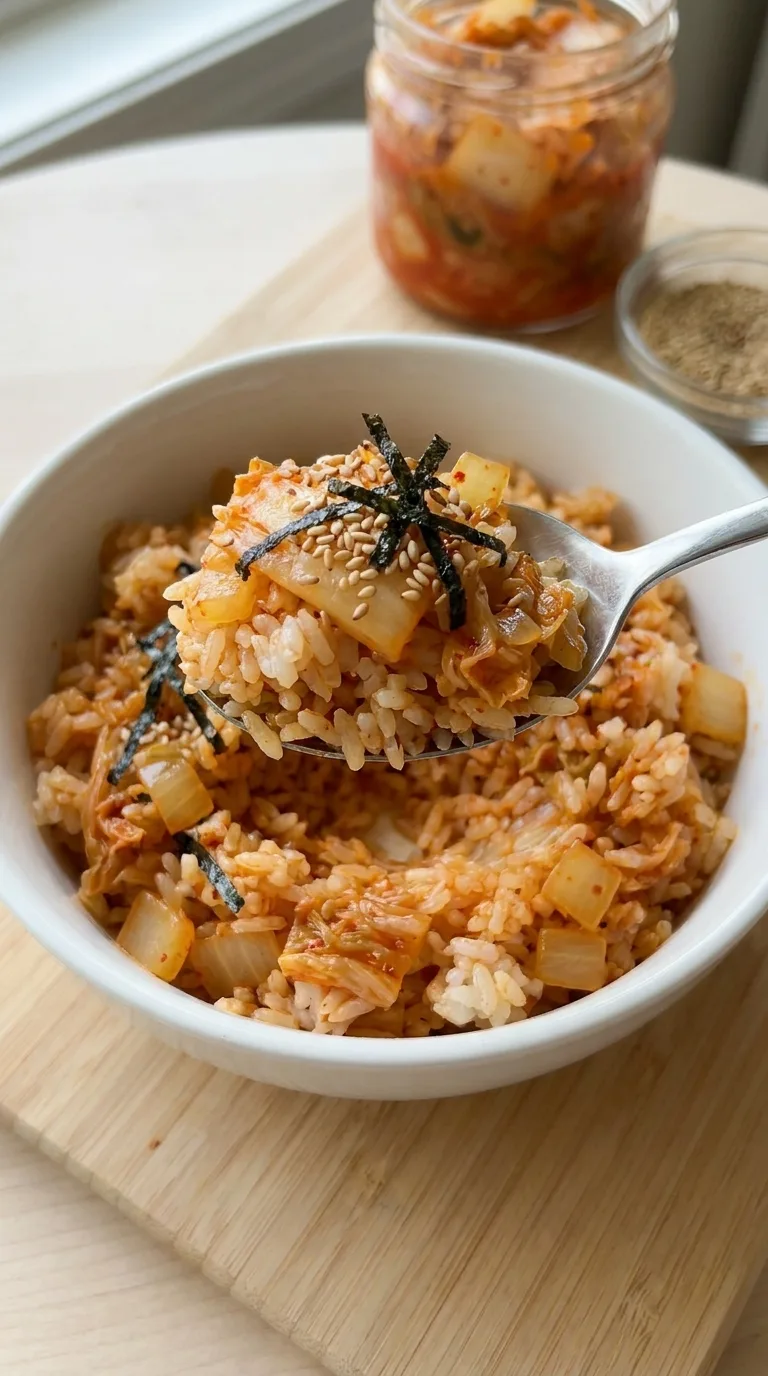
Divide the Kimchi Bokkeumbap among four bowls or plates and top each serving with one fried egg. This presentation adds a beautiful touch to the dish.
Garnish
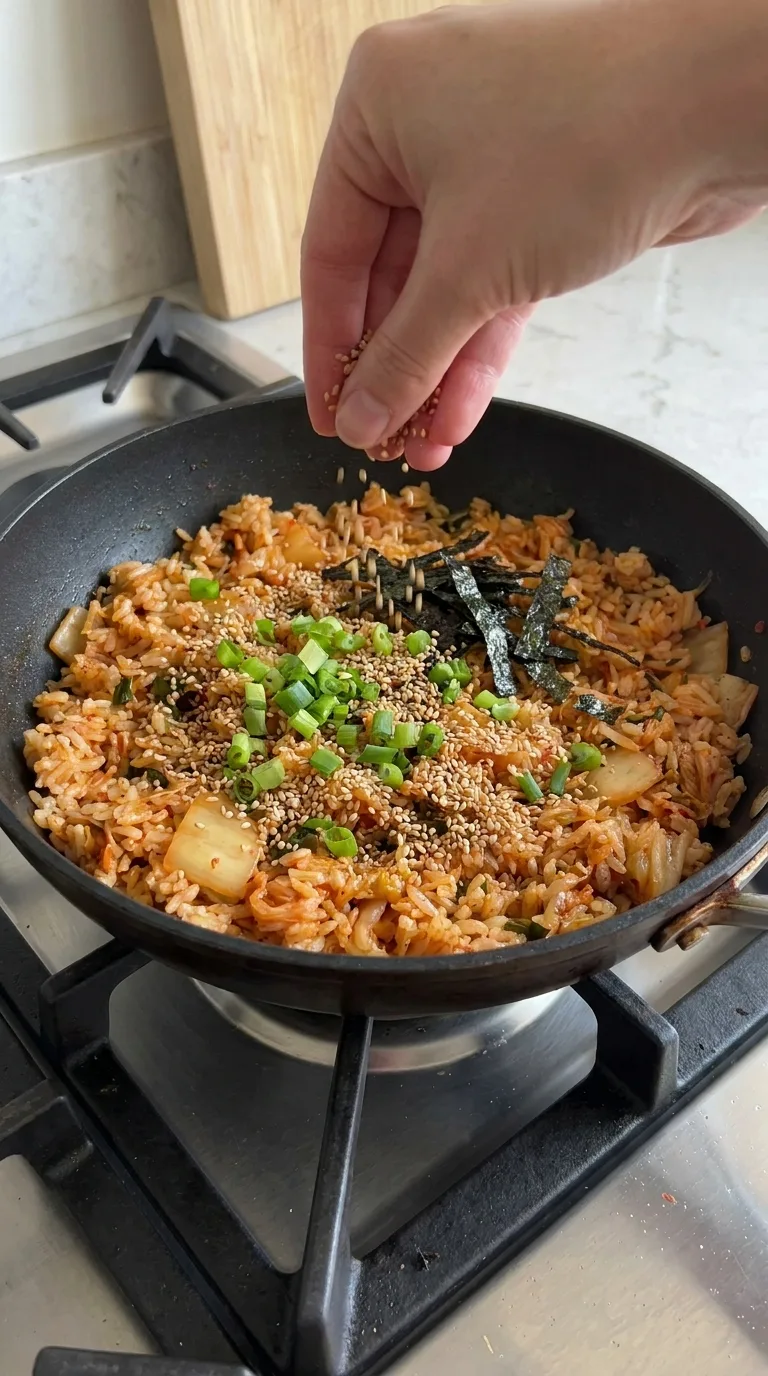
Sprinkle with toasted sesame seeds, roasted seaweed strips, and the reserved green onions as desired. Serve immediately for the best flavor and texture.
Tips for Success
- Use a wide skillet or wok so moisture can escape quickly instead of steaming the ingredients.
- Let the rice sit undisturbed briefly between tosses to create lightly crisp, browned areas.
- Taste before adding extra soy sauce because kimchi and gochujang can both contribute significant salt.
- Refrigerate cooked rice promptly after preparation and keep it properly chilled until ready to use.
Storage, Freezing, and Make-Ahead Instructions
Cool leftover Kimchi Fried Rice promptly and transfer it to an airtight container within 2 hours of cooking. Refrigerate for up to 4 days. Store leftover fried eggs separately when possible. Reheat the rice in a skillet over medium heat with 1 to 2 teaspoons of water or neutral oil, stirring until steaming hot and reaching 165°F (74°C).
Kimchi Fried Rice can be frozen without the eggs. Cool it completely, portion it into freezer-safe containers, and freeze for up to 2 months. Thaw overnight in the refrigerator or reheat from frozen until thoroughly hot.
For make-ahead preparation, cook the rice up to 1 day ahead, cool it promptly, and refrigerate it in a shallow airtight container. Chop the kimchi and green onions several hours ahead and refrigerate them separately.
FAQ
Can I make Kimchi Fried Rice with freshly cooked rice?
Yes, but spread the hot rice over a large tray and allow excess steam to escape before frying. Chilled rice is easier to separate and generally produces a less sticky texture.
Why is my Kimchi Fried Rice soggy?
The rice may have been too warm, the kimchi may have contained excessive liquid, or the skillet may have been overcrowded. Use chilled rice and cook the kimchi until some of its moisture evaporates before adding the grains.
Can I make Kimchi Fried Rice without gochujang?
Yes. Omit the gochujang and use the kimchi juice and soy sauce as written. The fried rice will be less spicy, less sweet, and slightly lighter in color.
Can I add protein to Kimchi Bokkeumbap?
Yes. Cooked diced chicken, pork, beef, tofu, or shrimp can be added before the rice. Any raw meat or seafood should be fully cooked to a safe internal temperature before it is combined with the finished rice.
How can I make Kimchi Fried Rice less spicy?
Use mild kimchi and reduce the gochujang to 1 teaspoon (6 g). You can also reduce the kimchi juice slightly and replace the difference with water.
Kimchi Fried Rice
Ingredients
For the Kimchi Fried Rice
- 4 cups chilled cooked short-grain or medium-grain white rice separated into loose grains
- 1 1/2 cups well-fermented napa cabbage kimchi roughly chopped
- 1/4 cup kimchi juice
- 2 tablespoons neutral oil such as avocado or canola oil, divided
- 1/2 medium yellow onion about 3 ounces (85 g), finely diced
- 3 garlic cloves minced
- 3 green onions thinly sliced, white and green parts separated
- 1 tablespoon gochujang
- 1 tablespoon reduced-sodium soy sauce
- 2 teaspoons toasted sesame oil
For the Fried Eggs
- 4 large eggs
- 1 teaspoon neutral oil
Optional Garnishes
- 1 tablespoon toasted sesame seeds optional
- 1 sheet roasted seaweed about 0.1 ounce (3 g), cut into thin strips, optional
- Additional sliced green onions optional
Instructions
Method
- Remove the chilled rice from the refrigerator and break apart any large clumps with clean fingers or a fork. The grains should be loose enough to spread easily through the skillet.
- In a small bowl, stir together the kimchi juice, gochujang, and soy sauce until the gochujang is mostly dissolved.
- Heat 1 tablespoon (15 ml) neutral oil in a 12-inch wok or large skillet over medium-high heat until shimmering.
- Add the diced onion and white parts of the green onions. Cook for 2 to 3 minutes, stirring frequently, until the onion is softened and lightly translucent.
- Stir in the minced garlic and cook for about 30 seconds, until fragrant but not browned.
- Add the chopped kimchi and stir-fry for 3 to 4 minutes. Some moisture should evaporate, and the edges of the kimchi should begin to soften and lightly caramelize.
- Add the chilled rice and remaining 1 tablespoon (15 ml) neutral oil. Toss and press the rice through the kimchi mixture until the grains are separated and evenly distributed.
- Pour the kimchi juice, gochujang, and soy sauce mixture over the rice. Toss thoroughly until the grains are evenly coated and turn reddish-orange.
- Spread the rice into an even layer and let it cook undisturbed for 1 to 2 minutes. Toss, spread again, and cook for another 1 to 2 minutes. The rice should be steaming hot with a few lightly browned, crisp areas.
- Remove the skillet from direct heat: Stir in the toasted sesame oil and most of the green onion tops, reserving a small amount for garnish.
- Heat 1 teaspoon (5 ml) neutral oil in a nonstick skillet over medium-low heat. Crack in the eggs and cook until the whites are fully set and the yolks reach your preferred doneness. For fully cooked eggs, cook until the yolks reach 160°F (71°C).
- Let the fried rice stand off the heat for 5 minutes. The grains will settle slightly while remaining hot.
- Divide the Kimchi Bokkeumbap among four bowls or plates and top each serving with one fried egg.
- Sprinkle with toasted sesame seeds, roasted seaweed strips, and the reserved green onions as desired. Serve immediately.




Pingback: Fresh Mediterranean Three Bean Salad