
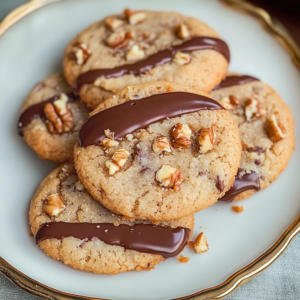
Toffee Pecan Shortbread Cookies combine rich, buttery shortbread with crunchy toasted pecans and sweet bits of caramel-flavored toffee. Each cookie has delicate, crisp edges, a tender, melt-in-your-mouth center, and little pockets of toffee that add sweetness and texture.
This slice-and-bake recipe uses a simple dough without eggs or baking powder. Chilling the dough helps the cookies hold their round shape in the oven, and preparing it ahead of time makes fresh-baked cookies easy to enjoy during the holidays or whenever you need a homemade treat.
Why This Recipe Works
- Butter creates the classic shortbread texture. A generous amount of butter gives these cookies their rich flavor and delicate, crumbly bite without the need for eggs.
- Powdered sugar produces a tender crumb. Its fine texture blends smoothly into the butter and helps prevent the cookies from becoming excessively crunchy or coarse.
- Toasted pecans add deeper flavor. Briefly toasting the nuts brings out their natural oils and gives them a more pronounced nutty flavor.
- Toffee bits add caramel sweetness. Small pieces distribute throughout the dough, creating occasional crisp, buttery bites without requiring homemade toffee.
- Chilled dough maintains its shape. Firming the dough before slicing helps the cookies bake into neat rounds with minimal spreading.
Equipment Needed
- Large mixing bowl
- Electric hand mixer or stand mixer fitted with a paddle attachment
- 2 large rimmed baking sheets, approximately 18 × 13 inches
- Parchment paper
- Sharp knife
- Plastic wrap
- Wire cooling rack
- Rubber spatula
Ingredients List
For the Shortbread Cookies
- 1 cup (226 g) unsalted butter, softened
- ¾ cup (90 g) powdered sugar, sifted
- 1 teaspoon (5 mL) pure vanilla extract
- 2½ cups (313 g) all-purpose flour, spooned and leveled
- ½ teaspoon (3 g) fine salt
- ¾ cup (85 g) pecans, finely chopped and toasted
- ¾ cup (120 g) plain toffee bits, without a chocolate coating
Optional Finishing Touch
- 2 tablespoons (15 g) powdered sugar, optional, for lightly dusting the cooled cookies
Ingredient Notes and Substitutions
- Unsalted Butter: Butter is the foundation of shortbread, providing its rich flavor, tender texture, and crumbly structure. Use softened butter that still feels slightly cool rather than melted or greasy. Salted butter can be substituted, but omit the added fine salt to avoid overly salty cookies. Margarine is not recommended because its water content and flavor can produce different results.
- Powdered Sugar: Powdered sugar gives these shortbread cookies a finer, more delicate texture than granulated sugar. It also blends easily into softened butter. Granulated sugar is not an ideal direct substitute because it produces a more noticeably crisp and grainy shortbread.
- Pecans: Pecans add buttery, nutty flavor and a gentle crunch. Toasting them before mixing brings out their aroma and removes some of their raw taste. Finely chopped walnuts can replace pecans in equal amounts, although they have a slightly more bitter flavor.
- Toffee Bits: Plain toffee bits provide concentrated caramel flavor and occasional crisp pockets throughout the shortbread. Chocolate-covered toffee bits can also work, but they introduce chocolate flavor and may melt against the baking sheet. Finely chopped homemade toffee is another option if it is firm enough to cut into small pieces.
- All-Purpose Flour: All-purpose flour provides structure while allowing the cookies to remain tender and crumbly. Measure carefully to avoid dry, difficult-to-shape dough. A one-to-one gluten-free baking flour blend may work, but the cookies could be more fragile and require a different chilling time.
Step-by-Step Instructions
1. Toast the Pecans
Preheat the oven to 350°F (175°C).
Spread the finely chopped pecans in a single layer on a small baking sheet. Toast for approximately 5–7 minutes, stirring once, until fragrant and slightly darker in color.
Transfer the pecans to a plate and let them cool completely before adding them to the dough. Warm nuts can soften the butter and affect the dough's consistency.
Keep the oven temperature at 350°F (175°C) if you plan to bake the cookies after chilling.
2. Cream the Butter and Sugar
In a large mixing bowl, beat the softened butter and sifted powdered sugar with an electric mixer on medium speed for approximately 2 minutes.
The mixture should be smooth, creamy, and slightly lighter in color.
Avoid beating it until excessively fluffy. Incorporating too much air can make shortbread puff and spread more during baking.
3. Add the Vanilla
Add the vanilla extract to the butter mixture.
Mix briefly on low speed until incorporated, scraping down the sides of the bowl with a rubber spatula.
The mixture should remain thick and creamy.
4. Incorporate the Flour and Salt
In a separate bowl, whisk together the flour and fine salt.
Add the flour mixture to the butter mixture in two additions, mixing on low speed after each addition.
Stop mixing when the dough forms soft, slightly crumbly clumps and no large pockets of dry flour remain.
Shortbread dough is naturally firmer and less sticky than many other cookie doughs. Avoid adding liquid simply because it looks crumbly.
5. Add the Pecans and Toffee
Add the completely cooled toasted pecans and plain toffee bits.
Fold them into the dough with a rubber spatula until evenly distributed.
If the mixture seems crumbly, gently press a small handful together. It should hold its shape when compressed. Avoid prolonged mixing, which can make the finished cookies tougher.
6. Shape the Dough into Logs
Divide the dough into two equal portions.
Place each portion on a sheet of plastic wrap and shape it into a log approximately 8 inches long and 2 inches in diameter.
Roll each log gently against the work surface to create an even cylindrical shape. Press in any loose pieces of pecan or toffee that protrude excessively.
Wrap each log tightly in plastic wrap.
7. Chill the Dough
Refrigerate the wrapped dough logs for at least 1 hour, or until firm enough to slice without flattening.
For the roundest cookies, rotate the logs occasionally during the first part of chilling so the bottoms do not become noticeably flat.
If the logs become extremely hard after extended refrigeration, let them stand at room temperature for approximately 5–10 minutes before slicing.
8. Prepare the Baking Sheets
Line two large rimmed baking sheets with parchment paper.
If the oven has been turned off, preheat it again to 350°F (175°C). Position the oven racks in the upper and lower thirds.
Remove the chilled dough logs from the refrigerator and unwrap them.
9. Slice the Cookies
Using a sharp knife, cut each log into 16 rounds approximately ½ inch thick, creating 32 cookies in total.
Rotate the log slightly after every few cuts to help maintain its round shape.
If a cookie cracks or crumbles around a piece of pecan or toffee, gently press it back together with your fingers.
10. Arrange the Cookies
Place 16 cookie rounds on each prepared baking sheet, leaving approximately 1½ inches between them.
These shortbread cookies should spread only slightly, but a little space allows hot air to circulate and promotes even baking.
If the dough becomes very soft while slicing, refrigerate the arranged cookies briefly before placing them in the oven.
11. Bake Until Lightly Golden
Bake both sheets for approximately 14–16 minutes, switching their rack positions and rotating them halfway through baking.
The cookies should have lightly golden edges and pale golden bottoms, while the centers remain relatively light.
Watch carefully during the final few minutes. Toffee pieces near the edges may turn darker than the surrounding dough.
Avoid waiting for the entire surface to become golden brown, as this can result in dry, overbaked shortbread.
12. Cool the Cookies
Remove the baking sheets from the oven and let the cookies rest on them for approximately 5 minutes.
The cookies will be delicate immediately after baking but will become firmer as they cool.
Carefully transfer them to wire cooling racks and let them cool completely for another 25 minutes.
13. Add the Optional Finishing Touch
Once the cookies are completely cool, lightly dust them with the optional powdered sugar.
Use a fine-mesh sieve to distribute the sugar evenly.
For a cleaner appearance that highlights the pecans and toffee pieces, leave the cookies plain.
14. Serve
Arrange the cooled Toffee Pecan Shortbread Cookies on a serving plate or package them in an airtight container.
Serve with coffee, tea, hot chocolate, or as part of a holiday cookie assortment.
Their buttery flavor and crisp, delicate texture become more noticeable once the cookies have cooled completely.
Storage, Freezing, and Make-Ahead Instructions
- Room-Temperature Storage: Store completely cooled Toffee Pecan Shortbread Cookies in an airtight container at room temperature for up to 7 days. Place parchment paper between layers if stacking the cookies. Keep the container in a cool, dry location away from direct sunlight. Moisture can soften the shortbread and make exposed toffee pieces sticky.
- Refrigeration: Refrigeration is not necessary for baked shortbread cookies. However, the unbaked dough logs can be refrigerated for up to 3 days before slicing and baking. Keep them tightly wrapped to prevent the dough from drying out or absorbing refrigerator odors.
- Freezing Baked Cookies: Allow the baked cookies to cool completely. Arrange them in a freezer-safe container with parchment paper between layers and freeze for up to 3 months. Thaw the cookies in their closed container at room temperature to help prevent condensation from forming directly on their surfaces.
- Freezing the Dough: The shaped shortbread dough logs can be frozen for up to 3 months. Wrap each log tightly in plastic wrap, then place it in a freezer-safe bag or container. Thaw the logs overnight in the refrigerator before slicing. If the dough is too firm to cut, let it stand briefly at room temperature.
- Make-Ahead Preparation: Prepare and shape the dough up to 3 days before baking. Keep the logs refrigerated until ready to slice, then bake the cookies as directed. For holiday baking, freezing several prepared dough logs allows you to bake smaller batches of fresh cookies whenever needed.
FAQ
Why are my Toffee Pecan Shortbread Cookies crumbly?
Shortbread naturally has a delicate, crumbly texture because it contains a high proportion of butter and no eggs. However, excessively dry dough may result from too much flour or butter that was not properly softened. Measure the flour accurately and mix until the dough holds together when pressed.
Can I make Toffee Pecan Shortbread Cookies ahead of time?
Yes. Shape the dough into logs and refrigerate for up to 3 days or freeze for up to 3 months. Slice and bake when needed. Baked cookies also keep well in an airtight container for up to 7 days.
Can I use chocolate-covered toffee bits?
Yes. Chocolate-covered toffee bits add another layer of flavor and can be substituted in the same amount. Keep in mind that the chocolate may melt against the baking sheet and make the cookie edges slightly messier.
Why did my shortbread cookies spread during baking?
Spreading usually occurs when the butter or dough is too warm. Chill the dough logs until firm and work quickly when slicing. Also, avoid overcreaming the butter and sugar, which can incorporate too much air.
Can I make these cookies without pecans?
Yes. Omit the pecans for a simpler toffee shortbread cookie, or replace them with an equal amount of finely chopped walnuts. Without nuts, the cookies will have a slightly smoother texture and a more pronounced buttery-toffee flavor.
Toffee Pecan Shortbread Cookies
Ingredients
For the Shortbread Cookies
- 1 cup (226 g) unsalted butter softened
- 3/4 cup (90 g) powdered sugar sifted
- 1 teaspoon (5 mL) pure vanilla extract
- 2 1/2 cups (313 g) all-purpose flour spooned and leveled
- 1/2 teaspoon (3 g) fine salt
- 3/4 cup (85 g) pecans finely chopped and toasted
- 3/4 cup (120 g) plain toffee bits without a chocolate coating
Optional Finishing Touch
- 2 tablespoons (15 g) powdered sugar optional, for lightly dusting the cooled cookies
Instructions
Method
- Preheat the oven to 350°F (175°C). Spread the finely chopped pecans in a single layer on a small baking sheet. Toast for approximately 5–7 minutes, stirring once, until fragrant and slightly darker in color. Transfer the pecans to a plate and let them cool completely before adding them to the dough. Warm nuts can soften the butter and affect the dough's consistency. Keep the oven temperature at 350°F (175°C) if you plan to bake the cookies after chilling.
- In a large mixing bowl, beat the softened butter and sifted powdered sugar with an electric mixer on medium speed for approximately 2 minutes. The mixture should be smooth, creamy, and slightly lighter in color. Avoid beating it until excessively fluffy. Incorporating too much air can make shortbread puff and spread more during baking.
- Add the vanilla extract to the butter mixture: Mix briefly on low speed until incorporated, scraping down the sides of the bowl with a rubber spatula. The mixture should remain thick and creamy.
- In a separate bowl, whisk together the flour and fine salt. Add the flour mixture to the butter mixture in two additions, mixing on low speed after each addition. Stop mixing when the dough forms soft, slightly crumbly clumps and no large pockets of dry flour remain. Shortbread dough is naturally firmer and less sticky than many other cookie doughs. Avoid adding liquid simply because it looks crumbly.
- Add the completely cooled toasted pecans and plain toffee bits. Fold them into the dough with a rubber spatula until evenly distributed. If the mixture seems crumbly, gently press a small handful together. It should hold its shape when compressed. Avoid prolonged mixing, which can make the finished cookies tougher.
- Divide the dough into two equal portions: Place each portion on a sheet of plastic wrap and shape it into a log approximately 8 inches long and 2 inches in diameter. Roll each log gently against the work surface to create an even cylindrical shape. Press in any loose pieces of pecan or toffee that protrude excessively. Wrap each log tightly in plastic wrap.
- Refrigerate the wrapped dough logs for at least 1 hour, or until firm enough to slice without flattening. For the roundest cookies, rotate the logs occasionally during the first part of chilling so the bottoms do not become noticeably flat. If the logs become extremely hard after extended refrigeration, let them stand at room temperature for approximately 5–10 minutes before slicing.
- Line two large rimmed baking sheets with parchment paper. If the oven has been turned off, preheat it again to 350°F (175°C). Position the oven racks in the upper and lower thirds. Remove the chilled dough logs from the refrigerator and unwrap them.
- Using a sharp knife, cut each log into 16 rounds approximately ½ inch thick, creating 32 cookies in total. Rotate the log slightly after every few cuts to help maintain its round shape. If a cookie cracks or crumbles around a piece of pecan or toffee, gently press it back together with your fingers.
- Place 16 cookie rounds on each prepared baking sheet, leaving approximately 1½ inches between them. These shortbread cookies should spread only slightly, but a little space allows hot air to circulate and promotes even baking. If the dough becomes very soft while slicing, refrigerate the arranged cookies briefly before placing them in the oven.
- Bake both sheets for approximately 14–16 minutes, switching their rack positions and rotating them halfway through baking. The cookies should have lightly golden edges and pale golden bottoms, while the centers remain relatively light. Watch carefully during the final few minutes. Toffee pieces near the edges may turn darker than the surrounding dough. Avoid waiting for the entire surface to become golden brown, as this can result in dry, overbaked shortbread.
- Remove the baking sheets from the oven and let the cookies rest on them for approximately 5 minutes. The cookies will be delicate immediately after baking but will become firmer as they cool. Carefully transfer them to wire cooling racks and let them cool completely for another 25 minutes.
- Once the cookies are completely cool, lightly dust them with the optional powdered sugar. Use a fine-mesh sieve to distribute the sugar evenly. For a cleaner appearance that highlights the pecans and toffee pieces, leave the cookies plain.
- Arrange the cooled Toffee Pecan Shortbread Cookies on a serving plate or package them in an airtight container. Serve with coffee, tea, hot chocolate, or as part of a holiday cookie assortment. Their buttery flavor and crisp, delicate texture become more noticeable once the cookies have cooled completely.


