Pesto pasta is a comforting dish that fills the kitchen with the fresh aroma of basil and garlic. The silky texture of the sauce clings perfectly to each strand of spaghetti, making every bite feel cozy.
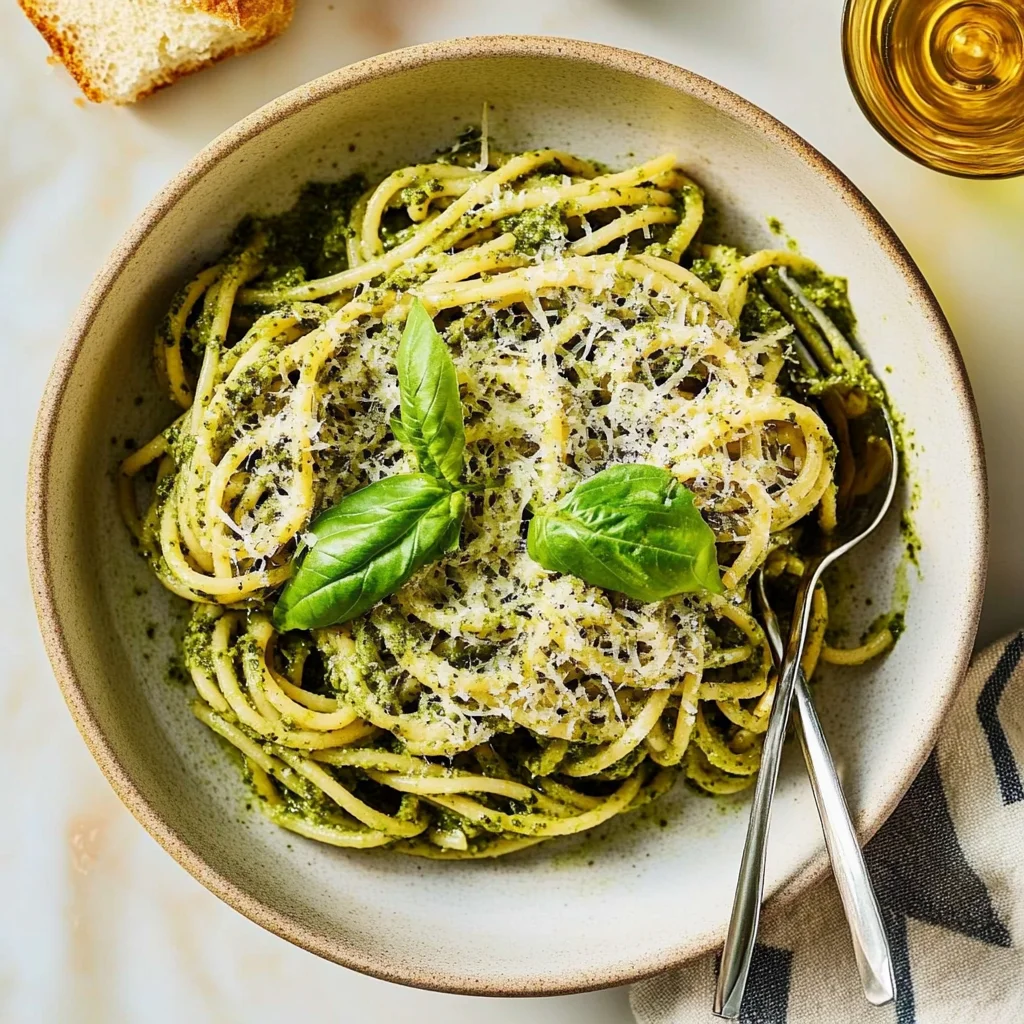
You can easily make this dish at home without any pressure. Feel free to adjust the ingredients to your liking, and remember, perfection isn’t necessary—just enjoy the process.
Why This Recipe Works
This pesto pasta recipe shines because it combines fresh, vibrant ingredients that complement each other beautifully. The bright basil and rich parmesan create a harmonious balance, while the toasted pine nuts add depth. Cooking the pasta al dente ensures a perfect texture that holds the pesto well, making for a delightful meal every time. With this in mind, let’s explore some variations you can try to personalize your dish.
The One Thing That Makes It Work
- The key to a truly delicious pesto pasta lies in using fresh basil and high-quality extra virgin olive oil.
- These ingredients not only enhance the dish’s flavor but also create a vibrant, aromatic sauce that clings perfectly to the pasta.
- When combined with freshly toasted pine nuts and grated parmesan, you achieve a well-balanced taste that elevates this simple dish.
Now that we’ve highlighted what makes this recipe special, let’s explore some tips for perfecting your pesto pasta every time.
Essential Ingredients
To create a delightful pesto pasta, you’ll need fresh and vibrant ingredients that work harmoniously together.
- 12 oz spaghetti: Choose your preferred pasta type; spaghetti is classic, but fettuccine or penne work well too.
- 1 tbsp salt: This is crucial for seasoning the pasta water, enhancing the overall flavor.
- 2 cups fresh basil leaves: Use packed leaves for a robust and aromatic pesto; freshness is key!
- 1/2 cup extra virgin olive oil: Opt for high-quality oil for a rich flavor; reserve some for drizzling.
- 1/3 cup pine nuts: Lightly toast them to bring out their nuttiness before adding to the pesto.
- 2 cloves garlic: Peel and use fresh garlic for a bold kick in your sauce.
- 1/2 cup parmesan cheese: Grate it finely to ensure it melts smoothly into the pesto.
- 1/4 tsp salt: Adjust to taste; start with less since parmesan adds saltiness.
- 1/4 tsp black pepper: Freshly ground provides a warm spiciness that complements the pesto.
- 1/4 cup parmesan cheese (for garnish): Shaved or grated, this adds a delicious finishing touch to your dish.
- 2 tbsp pine nuts (for garnish): Toasted again for extra crunch and flavor contrast in each bite.
- 1 tbsp extra virgin olive oil (for garnish): A drizzle enhances presentation and adds richness just before serving.
The full ingredients list, including measurements, is provided in the recipe card directly below.
Do This, Not That
- When making your pesto pasta, opt for fresh basil leaves rather than dried ones to achieve a vibrant flavor profile.
- Choosing high-quality extra virgin olive oil instead of standard olive oil will elevate the dish’s richness and depth.
- Lastly, use freshly grated parmesan cheese instead of pre-grated to ensure a creamy texture that clings beautifully to the pasta.
Now that you have the essentials down for making a delicious pesto pasta, let’s explore some creative variations to enhance your dish even further!
Step-by-Step Method
Start by bringing a large pot of salted water to a boil. You want it to be bubbling vigorously before adding your pasta, which helps ensure the spaghetti cooks evenly. The water should smell slightly salty as it heats up.
Once the water is boiling, gently add the spaghetti. Stir it occasionally to prevent sticking. Cook according to the package instructions until it’s al dente, which usually takes about 8 to 10 minutes. The pasta should be firm yet tender when bitten.
While the pasta cooks, prepare the pesto in a food processor. Begin by combining the fresh basil leaves, toasted pine nuts, and garlic cloves. Pulse them together until they’re finely chopped, creating a fragrant mixture that fills your kitchen with a fresh aroma.
With the processor running, slowly drizzle in the extra virgin olive oil. You’ll notice it transforming into a smooth and vibrant green sauce. Once blended, add in the grated parmesan cheese along with salt and black pepper, pulsing again to combine everything well.
After draining your spaghetti, return it to the pot and mix in the pesto. Toss everything together until each strand of pasta is coated in that lovely green sauce. If it feels too thick, add reserved pasta water gradually until you reach your desired consistency.
To serve, transfer your pesto pasta into a bowl and sprinkle with extra parmesan cheese and toasted pine nuts for added texture. A light drizzle of olive oil on top enhances both taste and presentation while your dish is still warm and inviting. Now that your dish is ready, let’s explore some delicious variations you can try!
Troubleshooting (If Something Goes Wrong)
If your pesto pasta turns out too thick, simply add reserved pasta water a tablespoon at a time until you achieve your desired consistency. If the flavor seems off, try adjusting with a pinch of salt or a splash of lemon juice for brightness. Remember, cooking is an art and mistakes can be easily fixed! Now, let’s explore some delightful variations to elevate your pesto pasta experience.
Variations You’ll Actually Want to Try
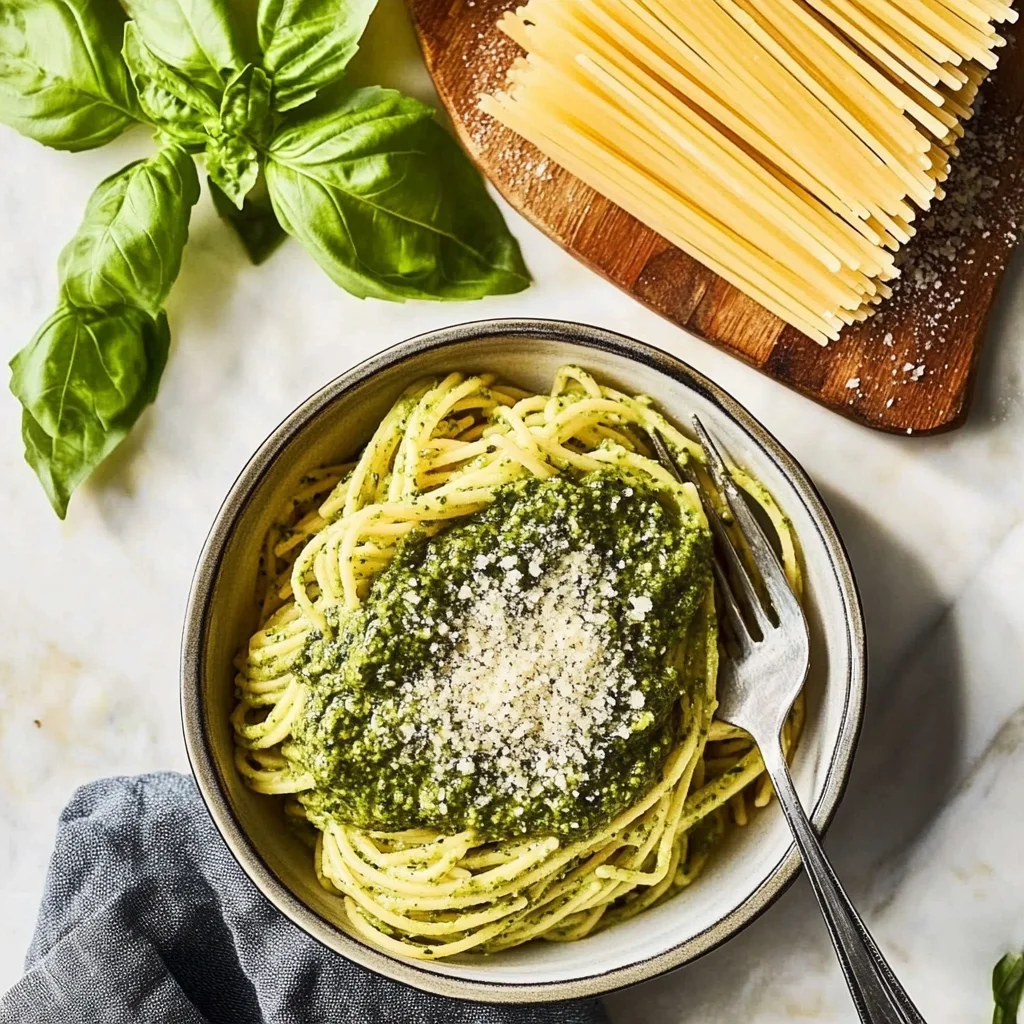
Feel free to experiment with your pesto pasta by adding sun-dried tomatoes for a tangy kick or swapping out pine nuts for walnuts for a different nutty flavor. You can also toss in some cherry tomatoes or spinach for extra freshness, or add red pepper flakes if you like a bit of heat. Remember, it’s all about what you enjoy! Now let’s explore some delicious serving suggestions to elevate your dish even further.
Pick Your Flavor Path
- For a spicy kick, add a pinch of red pepper flakes to the pesto before blending.
- If you’re craving freshness, toss in some lemon zest right before serving for a bright finish.
- To enhance the cheesy goodness, mix in extra grated parmesan with the pasta just before serving.
With these flavor directions, you’re all set to elevate your pesto pasta experience!
FAQ
How long does it take to prepare pesto pasta?
Preparing pesto pasta takes about 20-30 minutes from start to finish, including cooking and blending.
Can I substitute other nuts in the pesto for my pesto pasta?
Yes, walnuts or almonds can be used instead of pine nuts in the pesto.
How should I store leftover pesto pasta?
Store leftover pesto pasta in an airtight container in the fridge for up to three days.
To enhance your experience, let’s explore some creative variations you can try with your pesto pasta.
Pesto Pasta
Ingredients
Method
- Bring a large pot of salted water to a boil. Use about 1 tablespoon of salt for every 4 quarts of water to enhance the pasta's flavor.
- Add the spaghetti to the boiling water and cook according to package instructions until al dente, usually about 8-10 minutes.
- Once cooked, reserve about 1 cup of pasta water, then drain the spaghetti in a colander.
- In a food processor, combine the fresh basil leaves, toasted pine nuts, and garlic cloves. Pulse until finely chopped.
- With the processor running, slowly drizzle in the extra virgin olive oil until the mixture is well blended and smooth.
- Add the grated parmesan cheese, salt, and black pepper. Pulse again until combined. Taste and adjust seasoning if necessary.
- In the large pot used for cooking the pasta, combine the drained spaghetti and pesto. Toss well to coat the pasta evenly.
- If the pesto is too thick, add reserved pasta water a little at a time until you reach your desired consistency.
- Transfer the pesto pasta to a serving bowl. Garnish with shaved or grated parmesan cheese, toasted pine nuts, and a drizzle of extra virgin olive oil.
- Serve immediately while hot, and enjoy your delicious homemade pesto pasta!