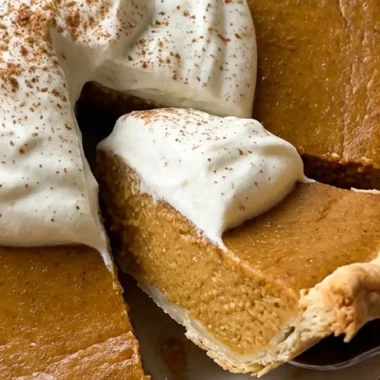
Classic Pumpkin Pie
Ingredients
Ingredients
- 1 1/4 cups all-purpose flour (150 g) plus extra for rolling
- 1 tablespoon granulated sugar (13 g)
- 1/2 teaspoon kosher salt (3 g)
- 1/2 cup cold unsalted butter (113 g) cut into 1/2-inch cubes
- 3 to 4 tablespoons ice water (45 to 60 ml) added gradually
- 1 can pure pumpkin puree 15 ounces (425 g), not pumpkin pie filling
- 3/4 cup packed light brown sugar (150 g)
- 2 large eggs (100 g) room temperature
- 1 large egg yolk (18 g) room temperature
- 1 cup evaporated milk (240 ml)
- 1 teaspoon vanilla extract (5 ml)
- 1 1/2 teaspoons ground cinnamon (4 g)
- 1/2 teaspoon ground ginger (1 g)
- 1/4 teaspoon ground nutmeg (0.5 g)
- 1/8 teaspoon ground cloves (0.25 g)
- Whipped cream optional, for serving
- Ground cinnamon optional, for sprinkling
Instructions
Method
- Make the pie dough: In a large bowl, whisk together the flour, granulated sugar, and kosher salt. Add the cold butter and cut it into the flour with a pastry cutter or your fingertips until the mixture resembles coarse crumbs with some pea-sized pieces of butter remaining.
- Add the ice water: Sprinkle in 3 tablespoons (45 ml) ice water and toss gently with a fork. Press some dough between your fingers. If it holds together, stop adding water. If it still looks dry and crumbly, add the remaining 1 tablespoon (15 ml) a little at a time.
- Chill the dough: Gather the dough into a disk without kneading it, wrap it tightly, and refrigerate for at least 30 minutes. The dough should feel firm but still be rollable.
- Roll and shape the crust: Lightly flour the work surface and roll the dough into an approximately 12-inch (30 cm) circle. Transfer it to a 9-inch (23 cm) pie plate, gently pressing it into the bottom and sides without stretching the dough. Trim the excess, then crimp or flute the edges.
- Chill the shaped crust: Refrigerate the shaped crust for 20 to 30 minutes. Meanwhile, preheat the oven to 400°F (205°C).
- Partially blind bake: Line the chilled crust with parchment paper and fill it with pie weights or dried beans. Place the pie plate on a baking sheet and bake at 400°F (205°C) for 15 minutes. Carefully remove the parchment and weights, then bake for another 5 minutes. The crust should look set and lightly dry but not deeply browned.
- Prepare the filling: While the crust bakes, whisk together the pumpkin puree, brown sugar, eggs, egg yolk, evaporated milk, vanilla, cinnamon, ginger, nutmeg, cloves, and kosher salt until smooth. Do not whip aggressively; excessive air can create bubbles in the custard.
- Fill the crust: Reduce the oven temperature to 350°F (175°C). Pour the pumpkin mixture into the warm partially baked crust. If there are visible bubbles on the surface, gently tap the pie plate on the counter once or twice.
- Bake the pie: Bake at 350°F (175°C) for about 40 to 50 minutes. The edges should look set while the center should still have a gentle wobble when the pie is carefully nudged. If the crust edges brown too quickly, cover them loosely with strips of aluminum foil.
- Check the custard: For food safety, the filling should reach at least 160°F (71°C) in the center when checked with an instant-read thermometer. Avoid overbaking until the center is completely firm, because the custard will continue setting as it cools.
- Cool completely: Transfer the pie to a wire rack and cool at room temperature for about 2 hours. The center should become noticeably firmer as it cools.
- Chill before slicing: Cover the cooled pie and refrigerate for at least 2 hours before serving. This additional chilling time helps the custard fully set and makes cleaner slices.
- Serve: Slice the chilled pie with a sharp knife. Serve plain or with optional whipped cream and a light sprinkle of cinnamon.
Tried this recipe?Let us know how it was!